Checking your oil is one of the easiest ways to protect your engine and prevent expensive repairs. The good news is that it only takes a few minutes and doesn’t require special tools.
In this guide, you’ll learn how to check oil correctly, how to read the dipstick, what your oil level should look like, and what to do if it’s low. Most drivers can complete a quick oil check in 3-5 minutes.
Before you check your oil level, take a moment to set things up properly. A few small details can make a big difference in getting an accurate reading.
Quick tip: If you just finished driving, waiting 5–10 minutes helps the oil settle for a more accurate dipstick reading. Some manufacturers allow checking when the engine is cold as well.
Most vehicles still use a dipstick to measure oil level. The process is simple once you know what to look for.
1. Locate the dipstick
Open the hood and look for the dipstick handle, usually yellow or orange.
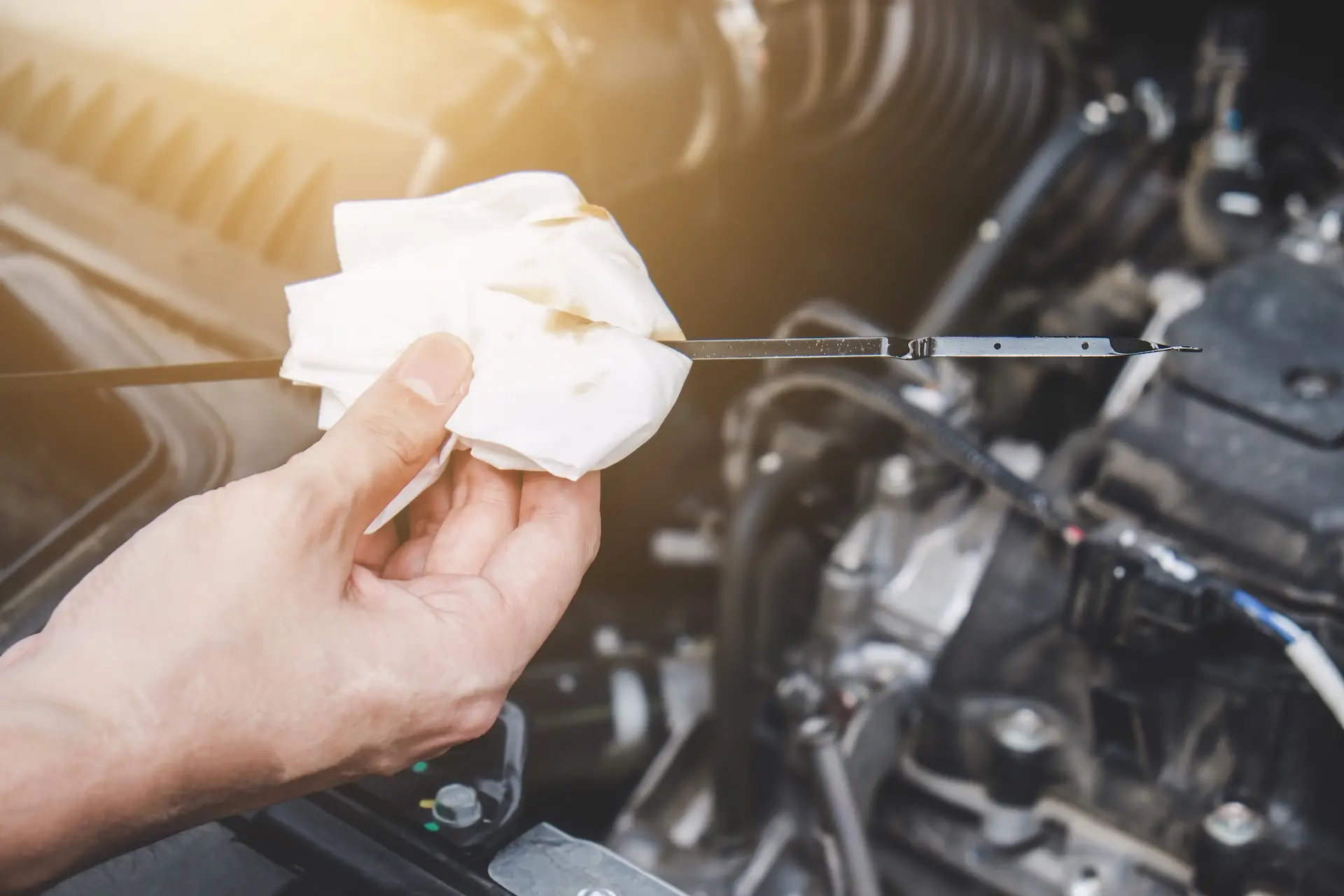
2. Pull it out and wipe it clean
Remove the dipstick and wipe off the oil with a paper towel.
3. Insert the dipstick fully
Push it all the way back into the tube so it seats completely.
4. Pull it out again and read the level
This time, check where the oil sits on the dipstick.
5. Make sure the oil is between the marks
Your oil should fall somewhere between the minimum and maximum marks.
Mistake to avoid: Some people read the smear of oil along the metal. Instead, look for the solid oil line where the level clearly stops.
Dipsticks usually have markings that show the safe oil range. These may appear as MIN/MAX labels, dots, cross-hatched sections, or lines.
The key things to know:
If the oil level is below the minimum mark, it’s time to add oil soon.

Some newer vehicles no longer include a traditional dipstick. Instead, they measure oil level electronically through the vehicle’s onboard system.
To check oil without a dipstick:
Your owner’s manual will show the exact steps for your model.
When you check your engine oil, it’s also a good opportunity to look at its condition.
Normal oil typically appears:
Signs something might be wrong include:
If the oil looks unusual, it may be worth having a professional inspection. You can also learn more about warning signs, like an oil light, in this guide on why your oil light might be on and what to do about it.
If your oil level is below the safe range, adding oil is usually straightforward.
Follow these steps:
Important: Avoid overfilling the engine. Too much oil can cause pressure issues and damage internal components.
Quick reminder: Overfilling can create its own problems, so adding oil slowly is always better than pouring in too much at once.
Many drivers rarely check their oil until something goes wrong, but regular checks can help prevent problems.
A simple rule of thumb:
If you recently bought a used vehicle, checking weekly for the first month can help you understand what your car’s normal oil consumption looks like.
You can also learn more about the importance of regular maintenance in this guide on what happens if you don’t change your oil.
Sometimes low oil is just a maintenance issue, but other times it can signal a deeper problem.
You may want a professional to take a look if:
If you want a quick second set of eyes, a technician can check your oil level and help determine what’s going on.
And if it’s simply time for fresh oil, Grease Pro oil changes are fast, reliable, and don’t require an appointment.
Checking your oil regularly is one of the easiest ways to extend your engine’s life and avoid costly repairs.
If you’d rather have a professional handle it, Grease Pro can check your oil and perform fast oil changes without an appointment.
Yes, but the engine should be turned off and allowed to sit for several minutes so the oil can drain back into the oil pan for an accurate reading.
Add oil in small increments, usually about half a quart at a time, then recheck the dipstick to avoid overfilling.
If there is no oil showing on the dipstick, the level may be very low. Add oil carefully and recheck the level before driving.
Most vehicles should sit 5-10 minutes after driving before checking oil.
Milky oil can indicate coolant mixing with engine oil, which may signal a serious issue such as a head gasket problem.
Engines can burn oil due to age, worn piston rings, valve seals, or leaks. Regular checks help catch this early.
With 12 locations, there's always one close by to service all of your automobile-related needs.
BROWSE ALL LOCATIONS +