Seeing burnouts and peel outs online makes a lot of drivers curious, and many people end up trying it “just once” to see what the fuss is about. It can feel harmless in the moment, especially if nothing breaks right away.
What most drivers do not realize is that even a brief loss of traction puts serious stress on multiple systems in the car. This article explains what actually happens to your vehicle when the tires spin and why those quick moments can affect the life of your engine, transmission, brakes, and tires.
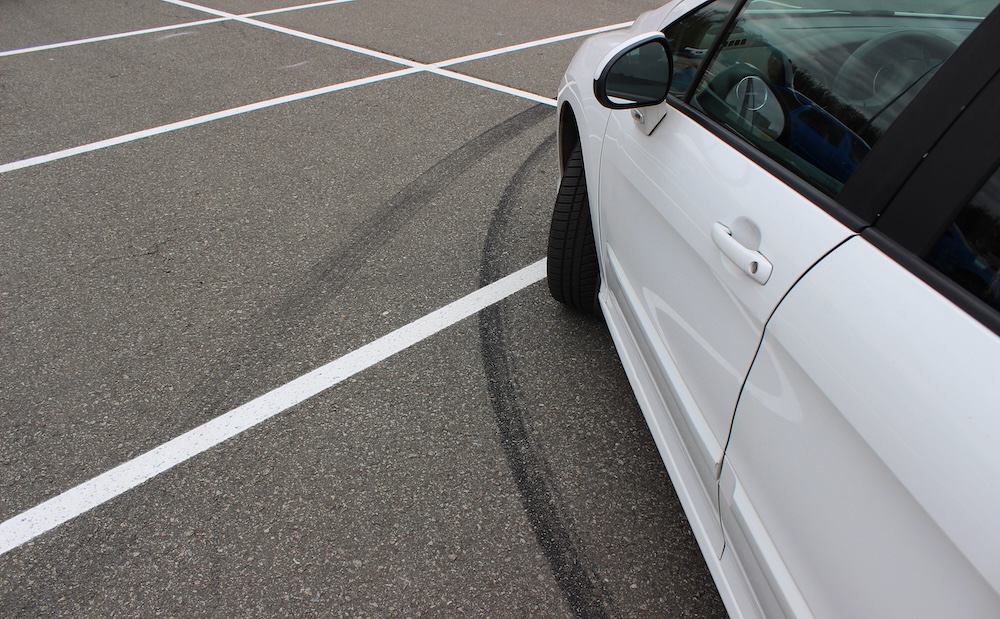
A burnout happens when the tires spin instead of gripping the road, creating heat, smoke, and the familiar smell of burning rubber. A peel out is a shorter version that happens when the tires break loose during hard acceleration, while drifting involves controlled tire slip while the car is already moving through a turn. During a burnout, the engine is trying to drive the car forward while the brakes and drivetrain are working to control or hold it back, creating intense heat and mechanical stress that can quickly wear on the tires, transmission, and braking components.
There really is no way to spin the tires without causing wear and stress. Even controlled, short burnouts still generate heat and shock that take a toll on your tires, transmission, and drivetrain, no matter what online forums might suggest.
When your tires spin instead of gripping the road, they build heat extremely fast. That heat softens the rubber, scrubs away tread, and can even create flat spots where the tire briefly locks and skids. Beyond what you can see, the internal structure of the tire can also be damaged by the sudden temperature spike and stress, increasing the risk of vibrations or blowouts later on. Even a “quick one” can take a noticeable amount of life out of your tires, which is why burning rubber, even briefly, shortens their overall lifespan.
Burnouts put extreme strain on the transmission because it is forced to transfer high engine power while the wheels are not moving normally. In automatics, this stresses the torque converter, clutch packs, and internal gears. In manuals, the clutch and gear sets absorb the shock. Vehicles with CVT transmissions can experience belt and pulley wear from the sudden load. All of this generates excessive heat, which breaks down transmission fluid and reduces its ability to protect internal parts, leading to faster wear and a higher risk of costly repairs over time.
When the tires suddenly lose and regain traction, the force does not just stay in the tires. It travels through the entire drivetrain. Axles, differentials, and driveshafts absorb sharp shock loads that can cause premature wear or even cracks over time. Wheel hop, which is the rapid grabbing and slipping of the tires, is especially hard on these components and can bend or damage them. Motor mounts and suspension parts also take a hit as the engine twists under load, which is why drifting or hard launches can lead to looseness, vibration, and alignment issues later on.
During a burnout, the brake pedal is often held while the engine is applying power, which means the braking system is working against the drivetrain. This creates extreme heat in the rotors and pads, leading to faster wear and possible warping. The heat can also cause brake fluid to overheat, reducing its effectiveness and, in severe cases, allowing air to form in the lines. Over time, this heat damage shortens braking performance and can make stopping distances longer and less predictable.
Not really. Drifting and hard launches create many of the same stress patterns as burnouts, including sudden shock to the drivetrain and extreme heat in the tires. Drifting also adds heavy side loads to the suspension and steering components, while both driving styles accelerate wear in the differential and wheel bearings. Even when done briefly, these forces can shorten the life of parts that are designed for controlled traction, not repeated loss of grip.
One burnout might not cause an immediate breakdown, but repeated heat and shock put steady wear on your vehicle’s most important systems. Over time, that stress shortens the life of parts and often leads to repairs that show up weeks or even months later. Common signs include:
These symptoms are your car’s way of signaling that the damage is starting to add up, even if everything seemed fine at first.
Being curious about how your car works and what it can do is completely normal. The key is understanding that actions like burnouts, hard launches, and drifting come with real mechanical consequences, even when they seem harmless in the moment. Knowing what that stress does to your tires, brakes, transmission, and drivetrain helps you make smarter choices that protect your vehicle and your wallet.
If you enjoy performance driving, safer outlets like track days or driving schools let you learn and have fun in a controlled environment without risking street safety. And if your car has already seen some hard driving, it is a good idea to have a professional take a look. A quick inspection of your tires, brakes, and driveline can catch problems early and prevent bigger repairs down the road. You can schedule your service with Grease Pro to make sure everything is still in good shape and ready for the miles ahead.
With 12 locations, there's always one close by to service all of your automobile-related needs.
BROWSE ALL LOCATIONS +