A flat tire does not always mean you need a brand-new tire, but not every puncture can be safely repaired either. Whether you picked up a nail, screw, or slow leak, the right solution depends on where the damage is, how severe it is, and what condition the tire is already in.
In this guide, we’ll break down the difference between plugging a tire, patching a tire, and replacing it completely so you can understand what’s safe, what lasts, and when it’s time to stop driving and get help.
A tire plug and a tire patch both repair punctures, but they work differently and are meant for different situations.
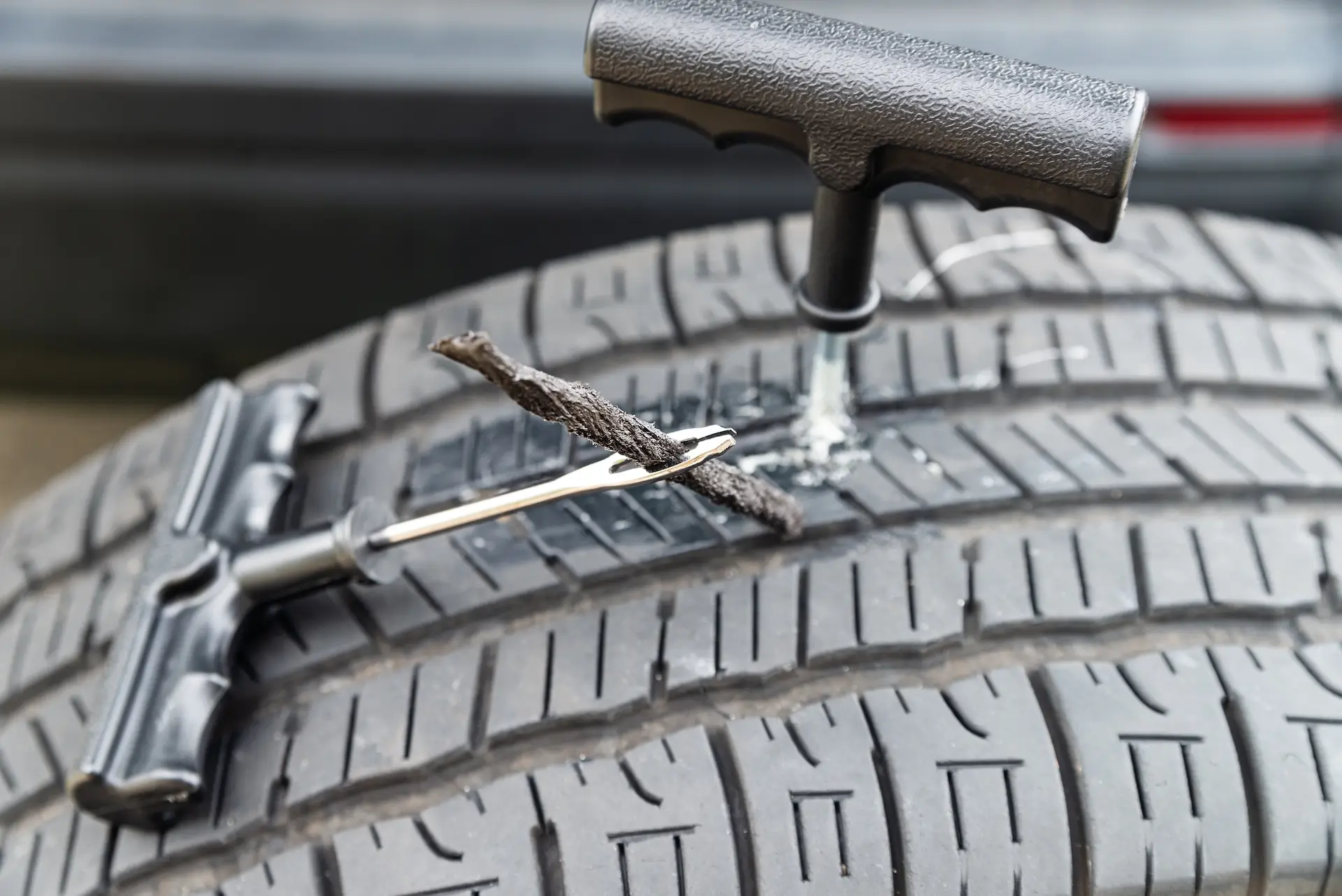
A tire plug is inserted from the outside of the tire to fill a puncture hole and stop air from escaping. This is usually the faster option and is commonly used for simple punctures caused by nails or screws.
A tire patch is installed from inside the tire after the wheel is removed and inspected. Patches seal the damaged area internally and are generally considered the more complete repair.
In many professional tire repair situations, shops use a plug-patch combination, which seals the puncture from both inside and outside for a stronger long-term repair.
Not every flat tire needs replacement. In many cases, a tire can safely be repaired if:
A simple screw in the tread is often repairable, especially if the tire was not driven while severely underinflated.
If you are searching for a tire repair near you because of a nail or screw, getting it inspected quickly gives you the best chance of saving the tire.
Some tire damage is simply too risky to repair safely.
A tire usually needs replacement if:
One of the most common questions drivers ask is how close to the sidewall a tire can be patched. In general, punctures near the sidewall are not considered safe to repair because that area flexes too much while driving.
If your tire is losing air slowly, it is also worth reading about why new tires can still leak air, since the issue is not always a puncture.
When comparing a tire patch vs plug, patches typically last longer because they seal the damage internally and help protect against moisture and debris entering the tire structure.
A tire plug can still work well for smaller punctures, especially when installed properly, but plugs are generally considered more temporary than a professional internal patch repair.
Many drivers also ask:
The safest option is always having the tire inspected by a professional tire repair shop before deciding which repair makes sense.
Sometimes, but not always.
Run-flat tires are designed to keep moving temporarily after losing air, but driving on them while flat can damage the internal sidewalls. Because of that, many run-flat tires cannot safely be repaired after losing pressure.
Whether a run-flat tire can be patched depends on:
This is one situation where a proper inspection matters more than guessing.
Most simple tire repairs are fairly quick.
A typical tire patch or plug repair often takes:
The exact timing depends on the damage, tire condition, and shop workload.
The cost to patch a tire varies depending on the repair type and whether the tire can safely be saved.
Factors that affect tire patch cost include:
In many cases, repairing a tire is far less expensive than replacing one, which is why getting the tire inspected early matters.
Some tire problems are more than just an inconvenience.
You should avoid driving if:
If your warning light is active, it may help to understand why your TPMS sensor light is on before continuing to drive.
DIY tire repair kits can help in emergencies, but they are not always the safest long-term solution. A professional inspection checks more than just the visible hole. It also looks for hidden internal damage, sidewall stress, and unsafe wear patterns that may not be obvious from the outside.
That is especially important when deciding whether to:
A proper repair is not just about stopping the leak. It is about making sure the tire is still safe at highway speeds and during daily driving.
Whether you picked up a nail, have a slow leak, or are not sure if your tire can be repaired, Grease Pro Tire Services can help inspect the damage and recommend the safest option.
From flat tire fixes to complete tire replacement, the goal is simple: help you get back on the road safely without replacing a tire unnecessarily.
Sometimes, yes. Small punctures in the tread area can often be plugged, though many professional repairs use a patch or plug-patch combination for better long-term sealing.
Punctures near the sidewall are generally not considered safe to repair because that area flexes heavily while driving.
A properly installed patch can often last for the remaining life of the tire if the damage is repairable and the tire is otherwise healthy.
In many cases, yes. A screw in the tread area is often repairable if the tire was not driven flat and the puncture is not too large.
Find the nearest Grease Pro location offering the service you need.
BROWSE ALL LOCATIONS +