Synthetic Blend vs Full Synthetic: What’s the Difference & Is Full Synthetic Worth It?

Once you’ve moved away from conventional oil, it feels like a smart step—synthetic just sounds better. But then you’re faced with another decision: should you stick with a synthetic blend, or go all in with full synthetic oil?

That’s the real question for many drivers. Is full synthetic truly better, or is a blend good enough for how and where you drive? In this guide, we’ll walk through the key differences in protection, price, and how long each oil lasts. You’ll see where full synthetic shines—and where a blend might do just fine—so you can make a confident, informed choice without any pressure.

What Is Synthetic Blend Oil?

Synthetic blend oil is a mix of conventional motor oil and synthetic base stock. It’s made to offer better performance than regular oil, like improved wear protection and cleaner engine operation, without the higher cost of full synthetic. For many drivers, it strikes a balance between protection and price.

  • More refined than regular oil, but not fully lab-made
  • Offers decent wear protection for most daily driving
  • Lower cost than full synthetic
  • Common in manufacturer specs for mid-range vehicles

Is synthetic blend oil good? For many everyday drivers, yes. It’s a solid step up from conventional oil, especially if you’re looking to extend engine life without jumping to a full synthetic oil change.

What Is Full Synthetic Oil?

Full synthetic oil is fully engineered in a lab for maximum purity, consistency, and performance. Unlike blends, it contains no conventional oil—just advanced base stocks and additives designed to hold up under stress. It performs exceptionally well in high heat, during cold starts, and over extended oil change intervals.

  • Designed for long-lasting engine protection
  • Flows better at extreme temperatures
  • Slows down engine wear and sludge buildup
  • Required in many newer or high-performance vehicles

Wondering does synthetic oil last longer? In most cases, yes. And when comparing options, it’s fair to ask: is full synthetic oil better than synthetic blend? For demanding conditions or newer engines, it often is.

Why More Drivers Are Choosing Full Synthetic (Even with the Cost)

Yes—Full Synthetic Lasts Longer.
Most full synthetic oils can go 7,500 to 10,000+ miles between changes. That’s nearly twice as long as a synthetic blend oil change interval.

While full synthetic oil can cost more up front, many drivers find the value adds up over time. Fewer oil changes, stronger protection, and better performance in tough conditions make it a smart choice. Especially if you drive long distances, tow, or plan to keep your vehicle for years. For many, the durability and reliability of full synthetic are well worth the extra cost.

Key Differences Between Synthetic Blend & Full Synthetic

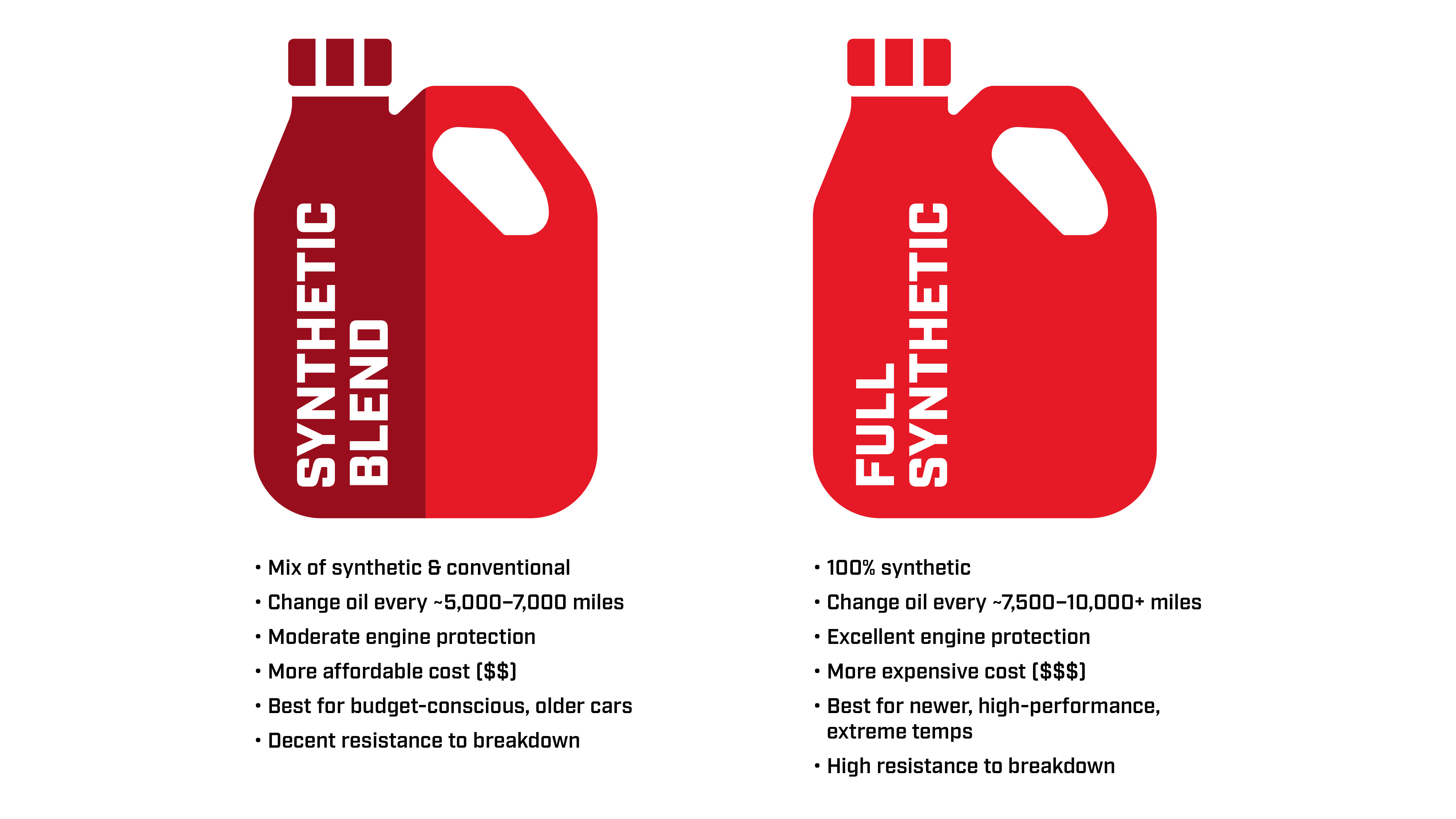
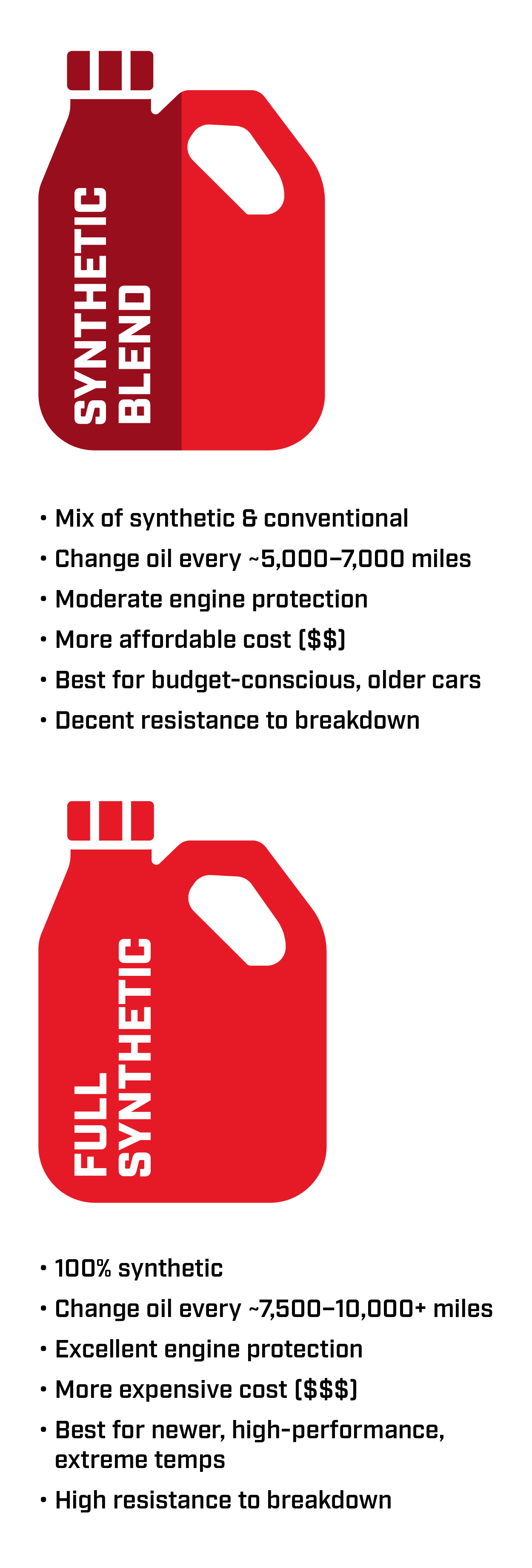
Feature Synthetic Blend Full Synthetic
Composition Mix of synthetic & conventional 100% synthetic
Oil Change Interval ~5,000–7,000 miles ~7,500–10,000+ miles
Engine Protection Moderate Excellent
Cost $$ $$$
Best For Budget-conscious, older cars Newer, high-performance, extreme temps
Resistance to Breakdown Decent High

The biggest difference between full synthetic and synthetic blend comes down to how long they last, how well they protect your engine, and how they perform in extreme conditions. If you’re looking for fewer oil changes or stronger performance for towing, hot weather, or long commutes, full synthetic oil is often the better choice.

When Is Full Synthetic Worth It?

Not every driver needs full synthetic, but for many, it’s absolutely worth it. If you’re on the fence, here are a few situations where upgrading makes real-world sense:

  • Your owner’s manual requires it.
    Some engines, especially in newer vehicles, are built with tighter tolerances or turbochargers that need a more stable oil formula. Full synthetic meets those higher standards.
  • You drive long distances regularly.
    The longer your engine runs, the hotter it gets. Full synthetic oil resists breakdown over time and keeps performing on extended trips.
  • You tow or haul heavy loads.
    Towing puts extra strain on your engine. Full synthetic helps protect key components by maintaining proper lubrication under pressure.
  • You drive in extreme heat or cold.
    Synthetic oil flows more easily at cold start and holds up better in high heat—making it ideal for Florida summers and fluctuating temps.
  • You want fewer oil changes.
    Most full synthetic oils can go up to 10,000+ miles with proper maintenance, cutting down how often you need service.

What If I Use Synthetic Blend Instead?

If your car doesn’t specifically require full synthetic, using a synthetic blend oil won’t hurt anything. It’s still a step up from conventional oil and provides solid protection for most daily driving. But there are a few things to keep in mind:

  • You may need oil changes more often.
    Synthetic blends don’t last as long as full synthetic, so you’ll likely be back for service sooner.
  • Performance might dip in extreme conditions.
    In high heat, cold starts, or under heavy engine loads, blends can break down faster and provide less consistent protection.
  • If your car requires full synthetic, a blend could cause problems.
    Using a blend when your manual calls for full synthetic could affect efficiency, or even void your warranty.

If none of the full synthetic scenarios apply to you, a blend might be just fine. And at Grease Pro, we’ll help you choose the right option based on your car, not just what’s in stock.

Still Deciding? Let’s Talk at Your Next Oil Change

Not sure which oil is right for your car? We’ve got you. When you come in for your next synthetic blend oil change or full synthetic service, our team will walk you through your options. No pressure, no guesswork, no appointment needed. 

  • We follow manufacturer specs, not upsell scripts
  • We explain the differences so you can decide with confidence
  • And we only use high-quality oil that matches your engine

Find a Location Near You


Curious how synthetic oil compares to conventional (regular) oil?

We break that down here: Synthetic Vs. Regular

Can You Use Dish Soap to Wash Your Car? What to Know Before You Grab the Sponge

You’re standing in front of your car, trying to figure out how to give it a quick wash. Your eyes land on the dish soap under the sink. It cuts grease and works wonders in the kitchen, so why not use it on your car? It’s a common question, and while some people recommend dish soap (especially Dawn) for washing cars, there’s more to the story. In this post, we’ll break down the truth behind using dish soap on your car and what you should use instead to protect your paint.


So, Can You Use Dish Soap to Wash Your Car?

Short answer: You can use dish soap to wash your car, but it’s not the best choice, especially for regular cleaning.

While dish soap, like Dawn, is great for cutting through grease and heavy grime, it’s too harsh for your car’s paint in the long run. Dish soap is designed to break down oils and grease, which is fantastic for kitchenware, but it can strip away the protective wax, sealants, and coatings on your car’s paint. Without these protections, your car’s finish becomes more susceptible to damage from the elements, leading to oxidation and dulling over time.

So, is dish soap safe for cars? Not really. While it won’t immediately ruin your car, it’s definitely not the ideal option for routine washing.


When Might Dish Soap Actually Be Okay?

There are times when dish soap could be used, but it should only be a one-time solution. For example:

  • If you’re removing fresh tree sap or grease.
  • If you’re prepping the surface for a wax or wrap.

In these cases, dish soap can help strip away the contaminants, making it easier to apply new protection. However, even then, it’s still not recommended for frequent use. If you do use dish soap once, don’t worry too much—your car won’t fall apart, but regular use can lead to long-term damage.

Can I use Dawn to wash my car? Yes, you can for a one-off deep clean, but remember it’s a powerful degreaser designed for dishes, not paint care.


What Kind of Soap Should You Use to Wash a Car?

So, what kind of soap can you use to wash your car without worrying about damaging the paint? The answer is pH-balanced car wash soaps. These are specifically designed to clean your car without stripping off protective wax layers or damaging the paint.

Here’s a quick breakdown:

  • pH-balanced car wash soaps are gentle on your paint and preserve wax and sealants.
  • Foaming vs. non-foaming: Foaming soaps are great for lifting dirt and debris off the surface, while non-foaming can be easier on the paint if you’re just doing a light rinse.
  • Best soap for washing a car: Look for soaps labeled as safe for automotive use, which won’t harm the clear coat or wax finish.

Can I Use Household Items Instead?

You might wonder, can I use shampoo to wash my car, or DIY car wash soap? While some household alternatives, like baby shampoo or diluted mild soap, can be safer than dish soap, they’re still not ideal for your car’s finish. These options might not provide the necessary cleaning power and often leave behind residues that can harm your paint in the long run.

  • Homemade car wash soap: While it might seem like a cheaper option, homemade mixes often lack the protective properties needed to keep your car’s paint safe.
  • Best household soap for washing a car: If you’re in a pinch, baby shampoo is a safer alternative, but it’s still not the best long-term solution.

Remember, the right car wash liquid soap is specially designed to clean and protect your car’s exterior, and it’s worth the investment.


Why the Right Soap Matters for Long-Term Paint Health

Choosing the right soap isn’t just about cleanliness—it’s about protecting your car’s paint for the long haul. Dish soap can strip away your car’s wax and clear coat, which protects it from harmful UV rays and environmental contaminants. Over time, this can lead to:

  • Oxidation and dulling of the paint.
  • Loss of UV protection, making your car more vulnerable to the sun.
  • Swirl marks and other imperfections from improper cleaning.

By sticking to automotive-safe products, you help your car maintain its shine, defend against UV damage, and preserve its resale value.

If you’re unsure what soap to use—or just want a worry-free option—Grease Pro’s professional car washes use the right tools and products to keep your vehicle looking its best.


When to DIY and When to Choose a Pro Wash

We get it—DIY car washes are fun and satisfying. But when should you choose a professional wash instead? Here are some scenarios when a pro wash might be worth it:

  • When dealing with heavy grime, bugs, or salt.
  • If you’re protecting your car’s finish with a wax or sealant.
  • When you’re short on time but still want a thorough, even clean.

All of Grease Pro’s car washes are designed to be quick, gentle on your paint, and easy to fit into your schedule.
If you’re a regular washer, you can even join our Grease Pro Wash Club—enjoy unlimited car washes with safe, automotive-grade soaps for one low monthly price.

Plus, with GP Loyalty Rewards, you earn GP Cash back on services that you can use toward future car washes, maintenance, or repairs.

Whether you prefer to DIY or treat your car to a professional wash, the important thing is using safe methods that protect your car’s finish, and we’re always here to help you keep it looking its best.


Final Thoughts: Taking Care of Your Car Doesn’t Have to Be Complicated

Choosing the right soap for your car might seem like one more thing to worry about, but it doesn’t have to be expensive or complicated.

Plenty of affordable, pH-balanced car wash soaps are available to help you clean your car safely at home—no fancy equipment needed. The key is just making sure whatever you use is gentle on your paint and protective layers.And if you ever want a foolproof option, Grease Pro’s professional car washes make it easy to get a safe, thorough clean with automotive-grade products.

No appointment needed—just drive up and go.

How to Stop Windshield From Fogging Up

There’s nothing more frustrating than a foggy windshield when you’re trying to drive, especially in cold or rainy weather. You turn on the heat to defog it, but then you’re stuck sweating in a box of hot air. Rolling down the windows just makes things worse by letting in the cold. So, what can you do? Luckily, there are simple solutions to stop your windshield from fogging up—without turning your car into a sauna.

Why Does My Windshield Fog Up?

Before we dive into solutions, let’s talk about why this happens in the first place. Your windshield fogs up because of condensation—moisture in the air inside or outside your car hitting the glass and turning into tiny water droplets.

  • Inside Fog: Warm, moist air from your breath, wet clothes, or even your car’s heater meets the cold windshield.
  • Outside Fog: Cold air outside meets the warmer windshield, causing moisture in the air to condense on the outside surface.

Understanding the cause makes it easier to stop car windows from fogging up in winter or rainy weather.

A Fogged Interior Windshield

If your windshield fogs up from the inside, try these simple fixes to clear it up and keep it from coming back:

  1. Use the Air Conditioner – Even in winter, the AC helps remove moisture from the air inside your car. Turn on your defroster with the AC to clear up fog quickly.
  2. Turn Off Recirculation – Fresh air from outside is drier than the humid air inside your car. Switch off recirculation mode to bring in fresh air.
  3. Keep Windows Clean – Dirt and oil trap moisture, making fogging worse. Clean your windshield regularly with a glass cleaner to reduce buildup.
  4. DIY Anti-Fog for Windshield – A simple hack is to apply a thin layer of shaving cream on your windshield, then wipe it off. This leaves a film that prevents condensation.
  5. Absorb Excess Moisture – Leave silica gel packs or a sock filled with cat litter in your car to absorb humidity.

A Fogged Exterior Windshield

Fogging on the outside of your windshield can be just as frustrating. Here are some ways to prevent it and maintain a clear view:

  1. Warm Up Your Car First – Let your defroster and heater warm up the windshield before driving to balance the temperature difference.
  2. Use an Anti-Fog Windshield Treatment – Special anti-fog products for windshields create a hydrophobic layer that prevents fog buildup.
  3. Apply Rain Repellent – Products like Rain-X help moisture bead up and roll off, reducing outside fogging.
  4. Don’t Wipe with Your Hands – Your hands leave oil on the glass, making fogging worse. Use a clean microfiber cloth instead.

Prevention

For a long-term solution to foggy windows, follow these preventative measures to keep moisture under control:

  • Check for Leaks – Moisture buildup inside your car could be from a leak. Make sure your doors and windows seal properly.
  • Change Your Cabin Air Filter – A clogged air filter holds moisture, leading to more fogging.
  • Crack a Window Slightly – Allowing some airflow helps equalize temperature and reduce condensation.

Expert Help for a Fog-Free Drive

Don’t let a foggy windshield put your safety at risk. At Grease Pro, we’re committed to keeping your vehicle in peak condition so you can enjoy a clear, comfortable drive in any weather. From expert windshield treatments to cabin air filter replacements, our team has the knowledge and tools to help you prevent fogging and maintain optimal visibility. Stop by your nearest Grease Pro location for professional service and let us handle the details—so you can focus on the road ahead.

Schedule a tune-up with Grease Pro today and keep your car performing at its best.