
Once you’ve moved away from conventional oil, it feels like a smart step—synthetic just sounds better. But then you’re faced with another decision: should you stick with a synthetic blend, or go all in with full synthetic oil?
That’s the real question for many drivers. Is full synthetic truly better, or is a blend good enough for how and where you drive? In this guide, we’ll walk through the key differences in protection, price, and how long each oil lasts. You’ll see where full synthetic shines—and where a blend might do just fine—so you can make a confident, informed choice without any pressure.
What Is Synthetic Blend Oil?
Synthetic blend oil is a mix of conventional motor oil and synthetic base stock. It’s made to offer better performance than regular oil, like improved wear protection and cleaner engine operation, without the higher cost of full synthetic. For many drivers, it strikes a balance between protection and price.
- More refined than regular oil, but not fully lab-made
- Offers decent wear protection for most daily driving
- Lower cost than full synthetic
- Common in manufacturer specs for mid-range vehicles
Is synthetic blend oil good? For many everyday drivers, yes. It’s a solid step up from conventional oil, especially if you’re looking to extend engine life without jumping to a full synthetic oil change.
What Is Full Synthetic Oil?
Full synthetic oil is fully engineered in a lab for maximum purity, consistency, and performance. Unlike blends, it contains no conventional oil—just advanced base stocks and additives designed to hold up under stress. It performs exceptionally well in high heat, during cold starts, and over extended oil change intervals.
- Designed for long-lasting engine protection
- Flows better at extreme temperatures
- Slows down engine wear and sludge buildup
- Required in many newer or high-performance vehicles
Wondering does synthetic oil last longer? In most cases, yes. And when comparing options, it’s fair to ask: is full synthetic oil better than synthetic blend? For demanding conditions or newer engines, it often is.
Why More Drivers Are Choosing Full Synthetic (Even with the Cost)
Yes—Full Synthetic Lasts Longer.
Most full synthetic oils can go 7,500 to 10,000+ miles between changes. That’s nearly twice as long as a synthetic blend oil change interval.
While full synthetic oil can cost more up front, many drivers find the value adds up over time. Fewer oil changes, stronger protection, and better performance in tough conditions make it a smart choice. Especially if you drive long distances, tow, or plan to keep your vehicle for years. For many, the durability and reliability of full synthetic are well worth the extra cost.
Key Differences Between Synthetic Blend & Full Synthetic
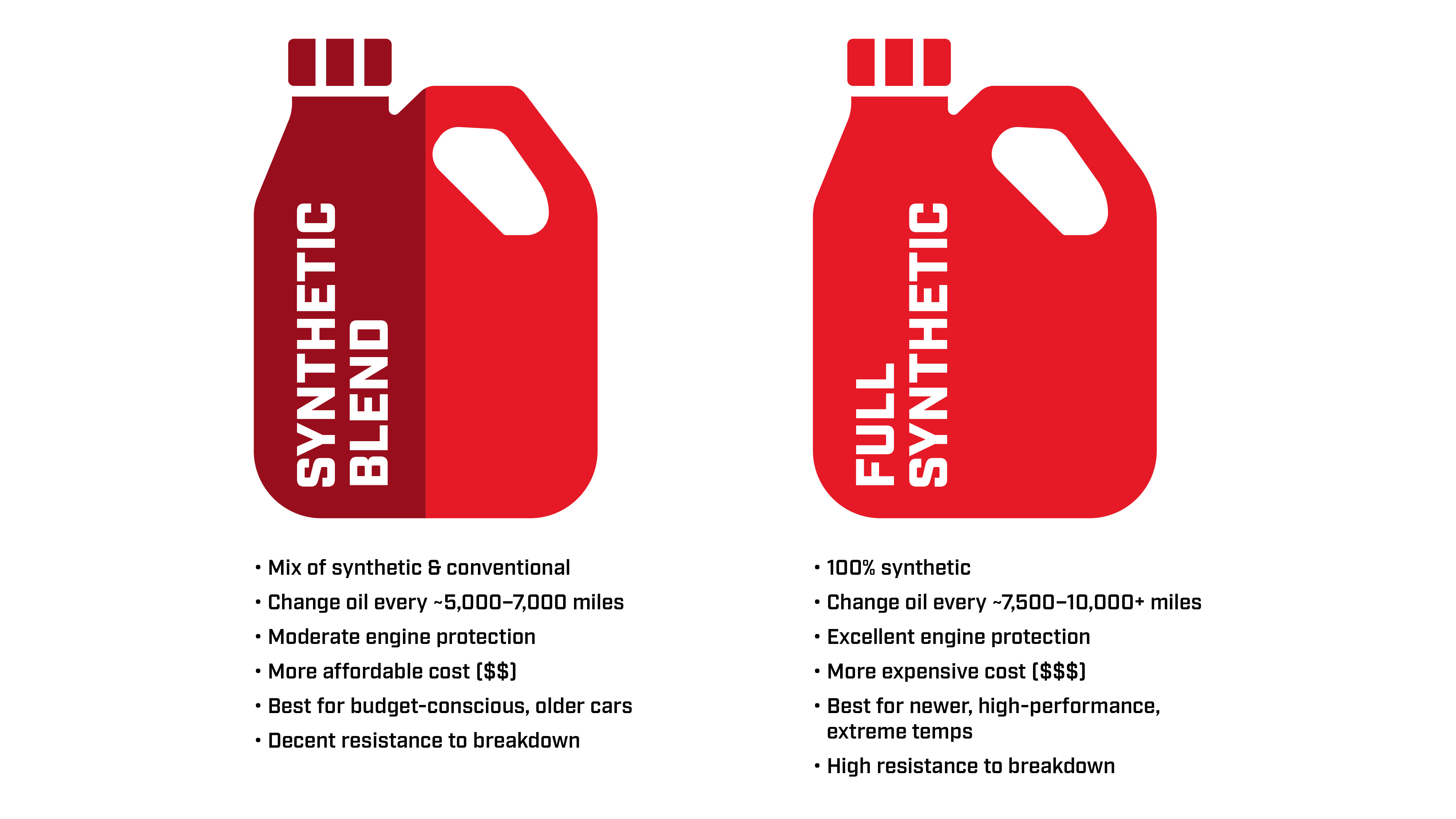
| Feature | Synthetic Blend | Full Synthetic |
| Composition | Mix of synthetic & conventional | 100% synthetic |
| Oil Change Interval | ~5,000–7,000 miles | ~7,500–10,000+ miles |
| Engine Protection | Moderate | Excellent |
| Cost | $$ | $$$ |
| Best For | Budget-conscious, older cars | Newer, high-performance, extreme temps |
| Resistance to Breakdown | Decent | High |
The biggest difference between full synthetic and synthetic blend comes down to how long they last, how well they protect your engine, and how they perform in extreme conditions. If you’re looking for fewer oil changes or stronger performance for towing, hot weather, or long commutes, full synthetic oil is often the better choice.
When Is Full Synthetic Worth It?
Not every driver needs full synthetic, but for many, it’s absolutely worth it. If you’re on the fence, here are a few situations where upgrading makes real-world sense:
- Your owner’s manual requires it.
Some engines, especially in newer vehicles, are built with tighter tolerances or turbochargers that need a more stable oil formula. Full synthetic meets those higher standards. - You drive long distances regularly.
The longer your engine runs, the hotter it gets. Full synthetic oil resists breakdown over time and keeps performing on extended trips. - You tow or haul heavy loads.
Towing puts extra strain on your engine. Full synthetic helps protect key components by maintaining proper lubrication under pressure. - You drive in extreme heat or cold.
Synthetic oil flows more easily at cold start and holds up better in high heat—making it ideal for Florida summers and fluctuating temps. - You want fewer oil changes.
Most full synthetic oils can go up to 10,000+ miles with proper maintenance, cutting down how often you need service.
What If I Use Synthetic Blend Instead?
If your car doesn’t specifically require full synthetic, using a synthetic blend oil won’t hurt anything. It’s still a step up from conventional oil and provides solid protection for most daily driving. But there are a few things to keep in mind:
- You may need oil changes more often.
Synthetic blends don’t last as long as full synthetic, so you’ll likely be back for service sooner. - Performance might dip in extreme conditions.
In high heat, cold starts, or under heavy engine loads, blends can break down faster and provide less consistent protection. - If your car requires full synthetic, a blend could cause problems.
Using a blend when your manual calls for full synthetic could affect efficiency, or even void your warranty.
If none of the full synthetic scenarios apply to you, a blend might be just fine. And at Grease Pro, we’ll help you choose the right option based on your car, not just what’s in stock.
Still Deciding? Let’s Talk at Your Next Oil Change
Not sure which oil is right for your car? We’ve got you. When you come in for your next synthetic blend oil change or full synthetic service, our team will walk you through your options. No pressure, no guesswork, no appointment needed.
- We follow manufacturer specs, not upsell scripts
- We explain the differences so you can decide with confidence
- And we only use high-quality oil that matches your engine
Curious how synthetic oil compares to conventional (regular) oil?
We break that down here: Synthetic Vs. Regular