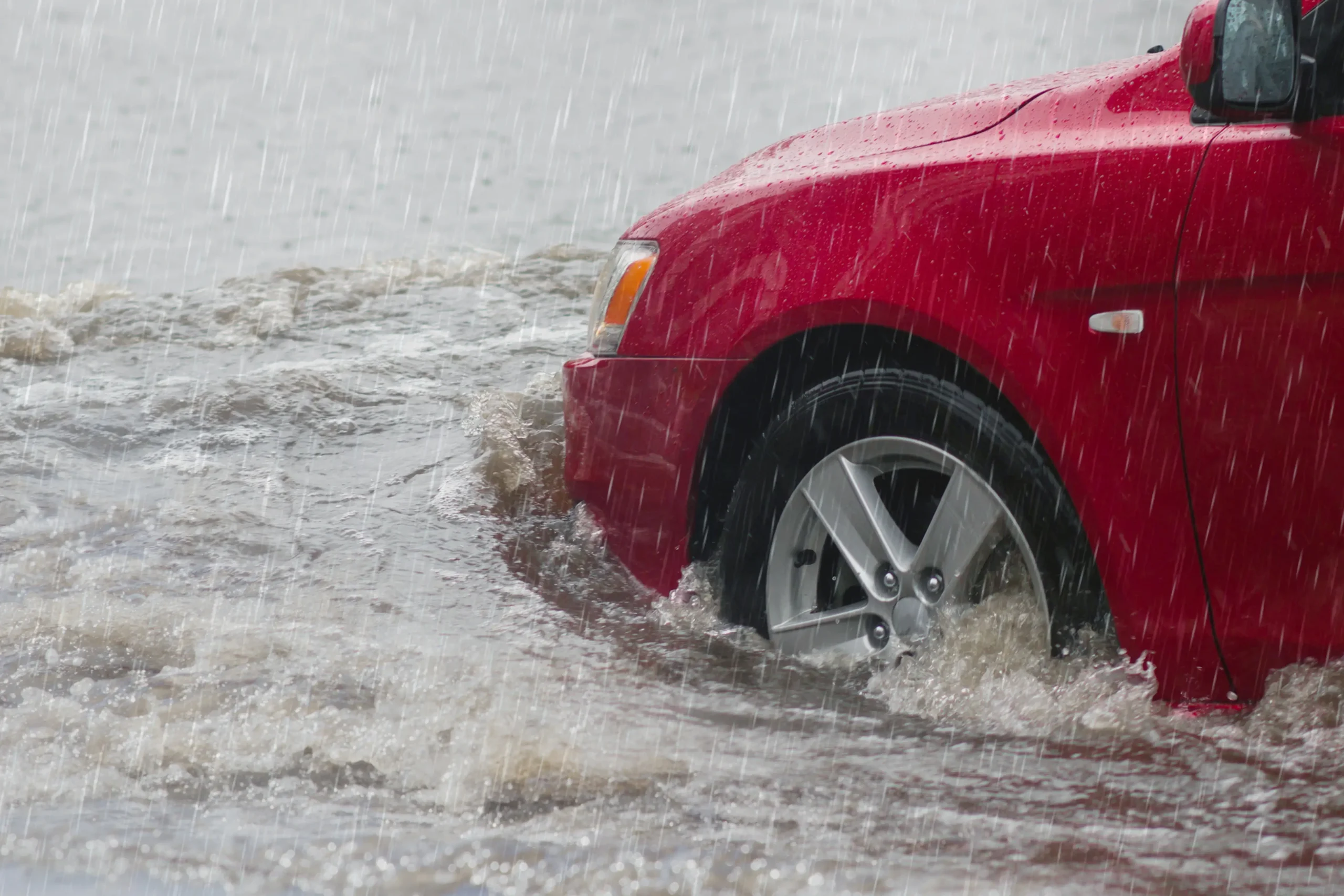
Heavy rain can turn a familiar Florida road into standing water faster than most drivers expect. Even if the water does not look especially deep, driving through it can affect your brakes, engine, electrical system, fluids, and other parts of your vehicle.
Some floodwater damage causes immediate problems, while other issues may not appear until days or weeks later. If your vehicle has been driven through high water, knowing what to check next can help you avoid turning a manageable problem into a much larger repair.
Yes, floodwater can damage your car, but the severity depends on how deep the water was, how long the vehicle was exposed, whether the engine was running, and whether the water was fresh or salty.
A quick splash through a shallow puddle is very different from driving through water that reaches the bottom of the doors, air intake, or electrical components. The deeper the water reaches, the more systems it can affect.
Floodwater can also hide washed-out pavement, debris, open drains, and other hazards. The safest choice is always to turn around instead of trying to judge whether the water is shallow enough to cross.
Your engine needs air and fuel to operate. If the air intake pulls in water instead of air, the engine may suddenly stall or experience a condition known as hydrolock.
Unlike air, water cannot be compressed inside the engine’s cylinders. Attempting to keep driving or restart the engine can damage internal components, including pistons and connecting rods.
If your vehicle stalls while crossing water, do not repeatedly try to restart it. Move to a safe location if possible and arrange for the vehicle to be towed. A professional engine diagnostic can help determine whether water entered the intake or affected other engine components.
Water may enter systems that rely on oil or other specialized fluids for lubrication and temperature control. This can include the engine, transmission, differential, and cooling system.
Contaminated oil may appear milky, cloudy, or foamy. However, water contamination is not always obvious from a quick visual check, especially when it has entered a sealed component.
Driving with contaminated fluid can reduce lubrication and create corrosion or wear inside expensive mechanical systems. After meaningful floodwater exposure, the appropriate fluids should be inspected before the vehicle is driven normally again.
Grease Pro provides services including oil changes, transmission fluid changes, and cooling system maintenance to help identify and address fluid-related concerns.
Water, mud, sand, and other debris can collect around the brake pads, rotors, lines, and related components. Immediately after traveling through water, the brakes may feel less responsive or take longer to slow the vehicle.
Light moisture may dry as you drive, but deeper or contaminated water requires more attention. Mud and debris can remain inside the braking system, while saltwater can accelerate corrosion.
Have your brakes checked if you notice:
A professional brake inspection can determine whether the system only needs cleaning or whether repairs are necessary.
Modern vehicles depend on sensors, wiring, computers, connectors, and electronic control modules. When water reaches these components, it can cause warning lights, starting problems, lighting issues, malfunctioning windows or locks, and other unpredictable behavior.
Electrical problems may not appear immediately. Moisture trapped inside a connector can gradually create corrosion, meaning the vehicle may seem fine at first and develop symptoms later.
Possible signs of water-related electrical damage include:
If these problems begin after heavy rain or floodwater exposure, an inspection of the vehicle’s electrical and electronic systems may help locate the source.
Drivers in Panama City, Panama City Beach, and other coastal communities should be especially cautious about storm surge and saltwater flooding.
Salt speeds up corrosion on wiring, connectors, brake parts, fasteners, suspension components, and other metal surfaces. Even after the visible water dries, salt deposits can continue damaging the vehicle.
A vehicle exposed to coastal floodwater should be inspected as soon as possible. The undercarriage may also need to be thoroughly cleaned to remove salt, sand, and other debris before corrosion spreads.
If you have already driven through standing water, take these steps:
Floodwater damage does not always cause an immediate breakdown. Problems may develop as moisture remains trapped or corrosion spreads.
Watch for these symptoms in the days and weeks after exposure:
Do not assume the vehicle is in the clear simply because it continued running after crossing the water.
A vehicle may be fine after brief contact with shallow water, especially if the water never reached the intake, interior, or vulnerable electrical components. However, it is difficult to judge water depth and hidden damage from the driver’s seat.
The safest approach is to have the vehicle checked if:
An inspection does not automatically mean the vehicle needs major repairs. It provides a clearer answer before hidden moisture creates additional problems.
The exact inspection will depend on how high the water reached and which symptoms the vehicle is showing. Common inspection points may include:
Grease Pro’s auto repair services include diagnostics, brake repair, battery and charging services, fluid maintenance, and other inspections that can help identify problems after severe weather.
Electric and hybrid vehicles require additional caution after flooding because water exposure may damage high-voltage battery components.
Do not touch exposed wiring, battery components, or a flooded charging system. If the vehicle has been submerged or you suspect damage to the high-voltage battery, keep a safe distance and contact the manufacturer, a properly qualified technician, or emergency services for direction.
NHTSA warns that flood-damaged high-voltage batteries can create shock and fire hazards, including problems that may appear after the initial exposure.
Florida storms can bring standing water, road debris, and coastal flooding with very little warning. If your vehicle has been driven through high water, addressing potential damage early may help prevent corrosion, electrical failures, and more expensive mechanical repairs.
Visit the Grease Pro location nearest you for dependable car care in Panama City, Panama City Beach, Lynn Haven, Callaway, Chipley, and surrounding Northwest Florida communities.
Find the nearest Grease Pro location offering the service you need.
BROWSE ALL LOCATIONS +