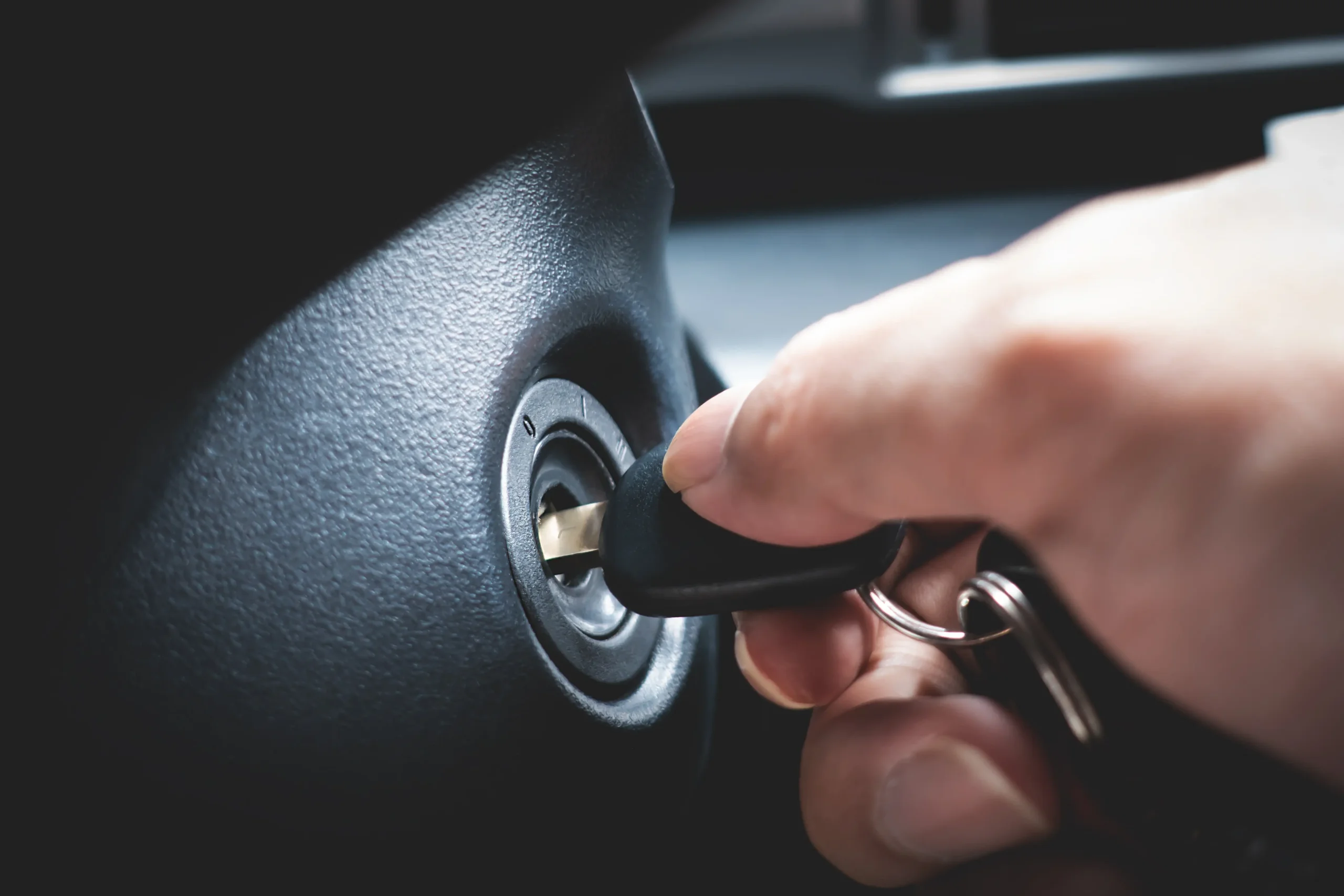
You turn the key or press the start button, but your car does not start. The problem could be as simple as a weak battery or loose connection, but it could also involve the starter, alternator, fuel system, ignition system, or another component.
The best first clue is what the vehicle does when you try to start it. Pay attention to the lights, sounds, and whether the engine cranks. Those details can help a technician narrow down the cause without relying on guesswork.
Before opening the hood, try to describe the exact symptom. This quick guide can help you understand the most likely categories, but it is not a substitute for testing.
| What happens when you try to start the car? | Possible causes | Safest next step |
| No lights, no sound, and no response | Dead battery, loose or corroded battery connection, main fuse, or electrical problem | Check that the vehicle is in Park and look for an obvious loose connection. Arrange for battery and electrical testing if the car remains unresponsive. |
| Rapid clicking | Weak battery or poor battery connection | Follow the owner’s manual if attempting a jump-start, then have the battery and charging system tested. |
| One click, but the engine does not turn | Starter, starter solenoid, cable, or battery issue | Avoid repeated attempts and have the starting system diagnosed. |
| Lights work, but the engine does not crank | Starter, ignition switch, neutral safety switch, key recognition, or connection problem | Try Park or Neutral and check for a key warning. Schedule professional diagnosis if it still will not crank. |
| Engine cranks normally but will not start | Fuel, ignition, sensor, security, or mechanical issue | Confirm there is fuel and check the dashboard for warnings. If it still will not start, arrange for service. |
| Engine starts, then dies | Alternator, connection, fuel delivery, or another electrical issue | Do not assume the battery alone is at fault. Have the starting and charging systems tested. |
A weak or dead battery is one of the most common reasons a car will not start. The battery must provide much more power to crank the engine than it needs to run the radio or illuminate the dashboard. That is why your lights may still work even when the battery cannot start the car.
Common clues include:
Most conventional car batteries last about three to five years, but heat, frequent short trips, long periods of inactivity, and electrical drains can shorten that range. Florida heat is especially hard on batteries, so age should not be the only factor you consider.
If you are unsure about the battery’s condition, a test is more useful than guessing. Grease Pro offers battery testing, replacement, and related services for drivers in Panama City and surrounding areas.
A healthy battery cannot deliver power through a poor connection. Loose cable clamps, corrosion around the terminals, or a damaged ground cable can interrupt the flow of electricity and create symptoms that look like a dead battery.
You may notice white or bluish buildup around a terminal, intermittent power, flickering lights, or a vehicle that starts sometimes but not others. A visual check can reveal an obvious problem, but do not handle a leaking, cracked, swollen, or unusually hot battery. Those conditions require professional attention.
Cleaning corrosion may restore a connection, but recurring corrosion or repeated no-start problems can signal a deeper issue. A technician should inspect the battery, cables, and charging system together.
The starter uses battery power to turn the engine. If it or its solenoid fails, you may hear one solid click while the dashboard lights remain on. In other cases, there may be silence even though other electrical features still work.
A bad starter and a weak battery can produce similar symptoms. Repeatedly turning the key is not a reliable diagnosis and may create more heat in the circuit. Testing voltage, connections, and starter operation is the safer way to identify the actual fault.
The alternator supplies electricity while the engine is running and recharges the battery after startup. If it stops working correctly, the vehicle may run on stored battery power for a short time and then shut down. The next start attempt may make the battery appear to be the problem.
Possible alternator clues include:
These symptoms can also come from a bad connection or another electrical fault. A complete starting and charging system check helps distinguish a failed battery from an alternator, starter, or cable problem.
If the engine cranks at a normal speed but does not start, the battery and starter may be doing their jobs. The problem could be that the engine is not receiving fuel.
First, check the fuel gauge. If the gauge is inaccurate, the tank may be empty even when it appears to have fuel. Other possibilities include a fuel pump, relay, clogged filter, or electrical issue within the fuel system. Those problems require proper diagnostic equipment rather than repeated start attempts.
If you smell a strong fuel odor, stop trying to start the vehicle. Move away from it and call for professional help, especially if you also see a leak or smoke.
Modern vehicles use several systems to authorize a start. A worn key, dead key-fob battery, ignition switch problem, steering lock, or security system fault may prevent the engine from cranking.
An automatic transmission also has a safety switch that normally allows the engine to start only in Park or Neutral. Confirm that the shifter is fully in Park. If the vehicle still does not respond, try Neutral once while keeping your foot firmly on the brake. A key-shaped warning or “key not detected” message may point toward the key fob or anti-theft system.
Check the owner’s manual for model-specific instructions. Do not bypass a safety switch or force a key that will not turn.
A no-start condition can also involve a blown fuse, ignition coil, spark plug, crankshaft sensor, timing component, or internal engine problem. The engine may crank without firing, start and stall, or make an unusual grinding or spinning sound.
If the cranking sound changes suddenly, stop trying to start the vehicle. Continued attempts can make some mechanical problems worse. A scan for diagnostic trouble codes and a hands-on inspection can narrow down the cause.
A few simple observations can save time without turning a roadside problem into a risky repair:
Do not crawl under a vehicle on the roadside, bypass the starter, keep cranking through unusual noises, or attempt electrical repairs around smoke or leaking fluid.
Not necessarily. A jump-start shows that additional electrical power helped the engine start. It does not identify why the vehicle lost power.
The battery may be old or discharged, but the alternator may not be recharging it. A loose connection or parasitic electrical drain could also be responsible. If the vehicle starts after a jump, have the battery and charging system tested rather than assuming a new battery will solve the problem.
Arrange for roadside help or a tow when:
A car that will not start can have several possible causes, and replacing parts without testing can waste time and money. Grease Pro can inspect the battery, starter, alternator, cables, and related systems to find the source of the problem. Schedule a service or find a Grease Pro location to plan your next step.
Yes. Lights and dashboard electronics need much less power than the starter. A weak battery may operate those accessories but fail when asked to crank the engine. A poor battery connection or starter problem can cause similar symptoms, so testing is the best way to know.
The cause may be a poor cable connection, failed starter, ignition or security issue, fuel delivery problem, sensor fault, blown fuse, or mechanical problem. A battery test is helpful, but it is only one part of a complete no-start diagnosis.
Rapid clicking often points to low battery power or a poor connection. One solid click can be associated with the starter or starter solenoid, although battery and cable problems can sound similar. Avoid replacing a part based on the sound alone.
The battery may not have retained enough charge, or the alternator may not be charging it. A poor connection or another electrical fault is also possible. Have the battery and charging system tested before driving farther.
Find the nearest Grease Pro location offering the service you need.
BROWSE ALL LOCATIONS +