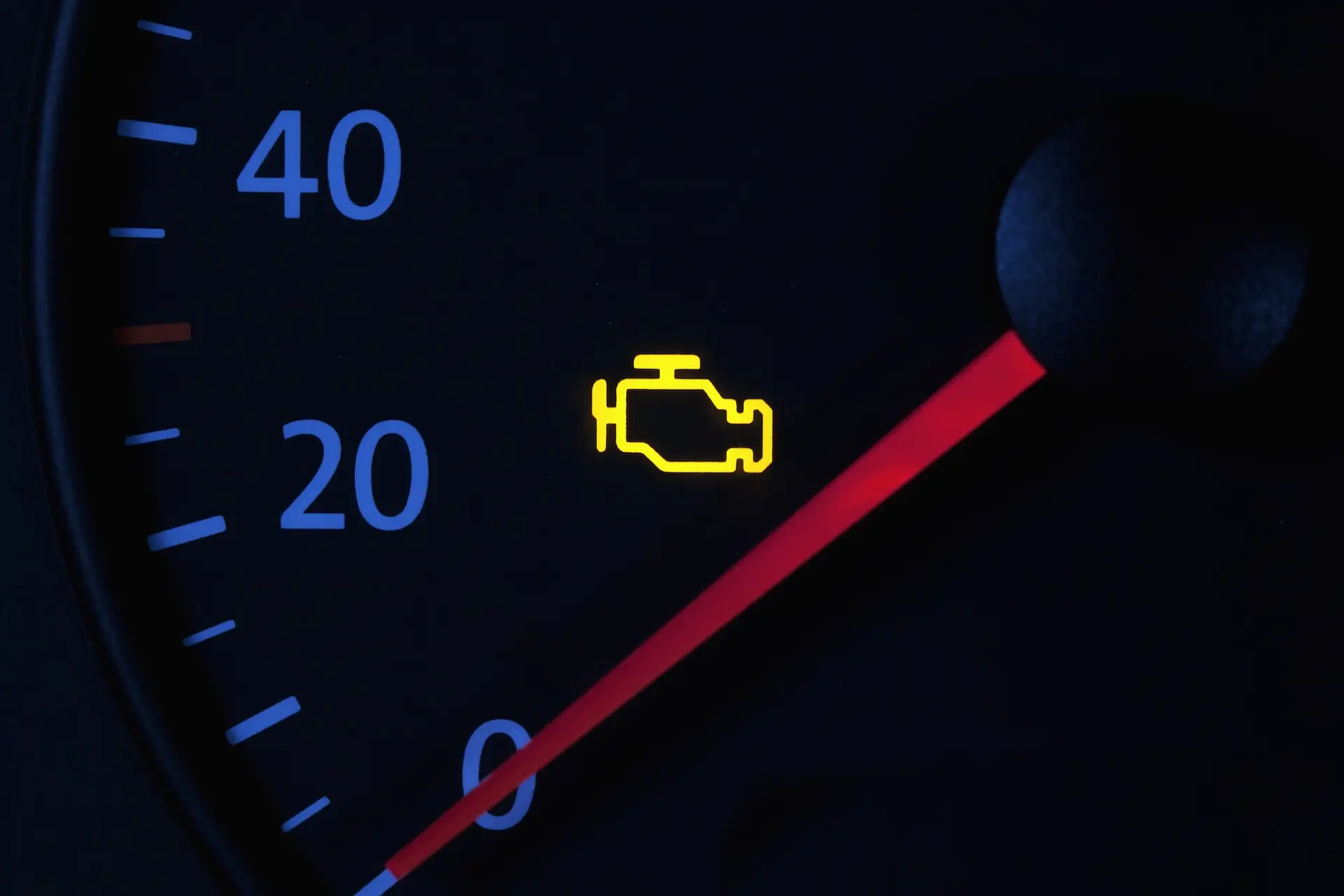
Few dashboard warnings create as much uncertainty as the check engine light. Your vehicle may seem to drive normally, or it may be shaking, losing power, or making an unfamiliar sound. The light itself can also stay on steadily or begin flashing, and that difference matters.
A check engine light does not tell you exactly which part needs to be replaced. It tells you that the vehicle’s onboard diagnostic system detected a problem that needs attention. Understanding the warning and the symptoms around it can help you decide whether to schedule service soon or stop driving now.
Modern vehicles use an onboard diagnostics system to monitor the engine, emissions equipment, fuel delivery, ignition, and related components. When the computer sees a reading outside the expected range, it stores a diagnostic trouble code and turns on the check engine light.
The code gives a technician a starting point, but it is not the same thing as a complete diagnosis. For example, a code associated with an oxygen sensor does not automatically prove that the sensor itself failed. A wiring issue, exhaust leak, fuel-mixture problem, or another condition may have caused the reading. Grease Pro’s engine diagnostic services combine code retrieval with testing so the repair is based on the cause, not a guess.
| Light | What It Usually Means | What to Do |
| Steady | The computer detected a fault that needs diagnosis. The vehicle may still seem to operate normally. | Check for other symptoms, tighten the gas cap if it is loose, and schedule diagnosis promptly. |
| Flashing | The vehicle may have a serious active problem, commonly a severe engine misfire. | Reduce speed and load. Pull over safely, shut the engine off if it runs poorly, and arrange professional help. |
A steady light generally means the computer has detected a problem, but it may not require you to stop at that exact moment. If the vehicle is driving normally and there are no other warning signs, avoid putting off diagnosis for weeks or months. Small issues can affect fuel economy, emissions, performance, or other components even before the vehicle feels different.
Start by checking whether the gas cap is loose, damaged, or missing. A cap that does not seal correctly can allow fuel vapors to escape and trigger an emissions-related code. Tighten it securely, but remember that the light may not disappear immediately. If it stays on, returns, or the vehicle develops symptoms, schedule a diagnostic appointment.
A flashing check engine light is more urgent. It often appears when the engine is actively misfiring badly enough that unburned fuel may enter the exhaust system. That can overheat and damage the catalytic converter, and continuing to drive may turn one repair into a much more expensive problem.
Ease off the accelerator, avoid hard acceleration or towing, and move to a safe place. If the vehicle is shaking, losing power, smelling strongly of fuel, smoking, or running unusually rough, shut the engine off and arrange for assistance. If you want to understand what an engine misfire can feel and sound like, Grease Pro’s guide to engine misfires explains the most common symptoms and causes.
The same warning light can represent many different problems. Some are simple. Others require more involved testing or repair. Common causes include:
Because several problems can create the same code or symptom, the most useful question is not simply which code appeared. It is what caused that code to appear.
Sometimes, but the answer depends on the light and the vehicle’s behavior. A steady light with no other symptoms may allow a short, careful drive to a repair shop. A flashing light, severe shaking, power loss, smoke, overheating, or a strong fuel smell is a reason to stop and seek assistance instead of continuing.
Your owner’s manual may also include vehicle-specific instructions for the warning. When in doubt, protecting the engine and catalytic converter is more important than trying to complete the trip.
A basic scan can retrieve a trouble code, which is useful information. However, replacing the component named in the code description can waste money if that part is only reporting a problem caused elsewhere. A technician may need to inspect wiring, review live sensor data, test fuel or ignition performance, check for leaks, or compare several systems before recommending a repair.
Grease Pro also offers dashboard warning-light testing and diagnostics for drivers who need help understanding what a warning means. The goal is to identify the problem clearly before work begins.
A light that turns off is encouraging, but it does not always mean the cause disappeared permanently. The computer may stop illuminating the light after the problem does not repeat for several drive cycles, while the code remains stored as history. Intermittent wiring issues, small leaks, or occasional misfires can also come and go.
If the light returns, the vehicle has symptoms, or the same warning appears repeatedly, have it checked. Sharing when the light appeared, how the vehicle behaved, and whether it happened during acceleration, idling, rain, refueling, or another condition can help with diagnosis.
A check engine light is easier to handle when you know what caused it and what needs to happen next. Grease Pro provides engine and dashboard diagnostics for drivers across Panama City, Panama City Beach, Lynn Haven, Callaway, Chipley, and surrounding Northwest Florida communities. Schedule a service online or find your nearest Grease Pro location to have the warning checked before a small problem becomes a larger one.
It can be. A flashing light often signals a serious active problem, commonly a severe misfire. Reduce speed, avoid heavy engine load, and pull over safely. If the vehicle is shaking, losing power, overheating, smoking, or smelling strongly of fuel, shut it off and arrange for assistance.
Yes. A loose or damaged gas cap can cause an evaporative-emissions leak and trigger the light. Tighten the cap correctly, but have the vehicle checked if the light remains on or returns.
Not always. Depending on the vehicle and the issue, the light may be cleared with diagnostic equipment or may turn off after the computer completes enough successful self-checks. Clearing a code without repairing the cause will not prevent it from returning.
Low or unstable voltage can sometimes create warning lights or trouble codes because vehicle computers and sensors depend on consistent electrical power. A diagnostic inspection can determine whether voltage is part of the problem or whether an engine or emissions fault is present.
Find the nearest Grease Pro location offering the service you need.
BROWSE ALL LOCATIONS +