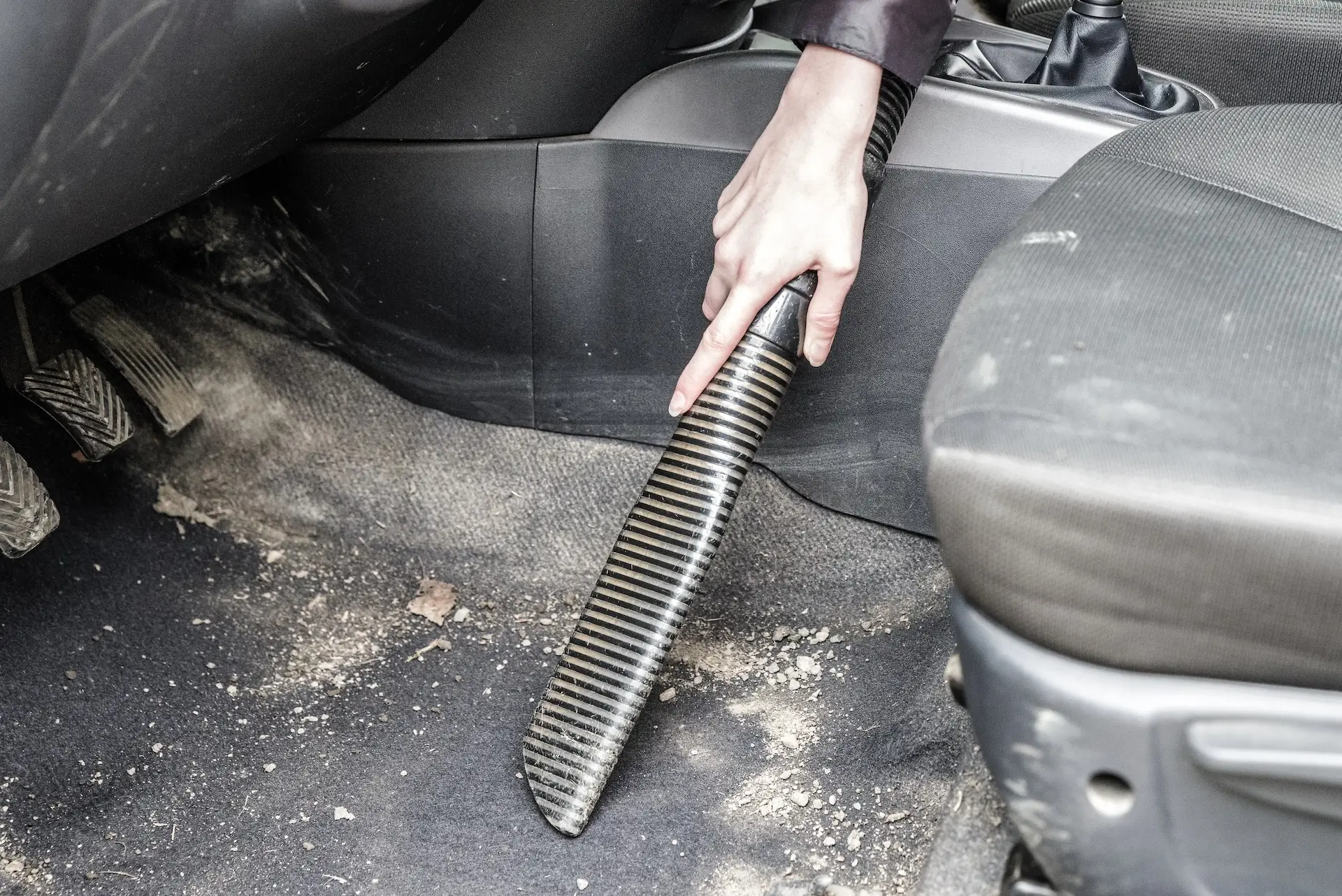
A beach day can end with more than a sunset photo and a pile of damp towels. Sand works its way into floor mats, carpet fibers, seat seams, door pockets, cupholders, and places you may not notice until days later. One quick vacuum pass rarely gets all of it.
If you are wondering how to get sand out of your car, the order matters. Start by removing loose items and floor mats, loosen the dry sand, vacuum slowly, and then work through seams and tight spaces. Cleaning from the top of the interior down helps keep sand from falling onto an area you already finished.
Dry sand is much easier to remove than wet sand. If the mats, towels, or seats are still damp, remove the wet gear and give the interior time to dry in a safe, shaded area before vacuuming.
Before turning on the vacuum, take out the floor mats, beach chairs, bags, towels, toys, shoes, and anything stored on the floor. Shake loose items away from the vehicle so the sand does not blow back inside.
Sand often settles below the surface of automotive carpet. Use a clean, soft-bristled brush to lift it from carpet fibers and fabric mats, working in small sections toward the vacuum nozzle.
An air hose can help move sand out of seat tracks, console edges, vents, stitching, and other narrow areas. Grease Pro’s car wash in Panama City includes self-service stations with vacuums, air hoses, microfiber towels, and mat-cleaning equipment, making it easier to work through the interior one section at a time.
A fast pass may make the carpet look cleaner, but removing beach sand takes patience. Move the nozzle slowly and repeat each section from more than one direction.
For a more complete cleanup, work in this order:
Use a crevice attachment around seat rails and narrow trim. If sand continues to rise from the carpet, brush the area again and follow with another slow vacuum pass.
Rubber mats can usually be shaken, rinsed, and dried completely. Carpeted mats may need brushing and vacuuming from multiple directions. If sand has mixed with spills, sunscreen, or dirt, carpet shampoo or hot-water extraction may be a better fit.
Sand can collect inside seatbelt anchors, beneath child seats, around the spare-tire compartment, between folding seats, and along door and trunk seals. Wipe hard surfaces with a clean microfiber towel after vacuuming, using a fresh side as soon as it feels gritty.
Vacuum as much dry sand as possible before using a damp cloth or cleaning product. Skip household cleaners unless they are specifically safe for the material you are cleaning, since leather, fabric, touchscreens, and coated trim can require different care.
The right option depends on how much sand made it inside and how deeply it has settled.
A self-service wash works well when the sand is mostly loose and you have time to clean the interior yourself using stronger vacuums, air hoses, towels, and mat-cleaning equipment.
A full-service wash is helpful when you want the exterior washed and routine interior cleaning handled for you. Depending on the package, the team can vacuum, clean the windows, wipe interior surfaces, and clean the mats.
If sand is ground into the carpet or mixed with stains, professional car detailing may be the better choice. Deeper services can include shampoo, steam extraction, and seat cleaning.
You may not be able to keep every grain out, but a few habits can reduce the cleanup after your next beach day.
The goal is not a perfectly sand-free beach day. It is preventing loose sand from becoming a larger interior cleaning job later.
Sand is part of life near Panama City Beach, but it does not have to stay in your vehicle. Working in the right order and choosing the appropriate level of cleaning can save time and frustration.
Visit the Grease Pro Car Wash and Detailing location on Highway 77 for self-service amenities, full-service wash options, or a deeper detailing appointment when your vehicle needs more attention.
Let the carpet dry, loosen the sand with a soft brush, and vacuum slowly from multiple directions. Repeat the brushing and vacuuming process if more sand rises from below the surface.
It is usually easier to let wet sand dry first. Dry grains separate more easily from carpet and upholstery, while wet sand can clump and settle deeper into the fibers.
Yes. An air hose can move sand out of seat tracks, seams, vents, and trim edges so it can be vacuumed. Direct the sand toward an open area instead of blowing it deeper into the vehicle.
An exterior wash will not clean the cabin. Choose a wash package that includes interior vacuuming, use the available self-service equipment, or schedule detailing if the sand is deeply embedded.
Detailing is worth considering when repeated vacuuming does not remove the grit, the sand is mixed with stains or moisture, or the carpet, mats, and seats need a deeper cleaning than routine vacuuming can provide.
Find the nearest Grease Pro location offering the service you need.
BROWSE ALL LOCATIONS +