You start the car and hear a sharp squeal from under the hood. A few seconds later, it fades away. It is easy to dismiss a sound that stops quickly, but a recurring startup squeal deserves attention.
So, why does your car squeal when you start it? A slipping or worn serpentine belt is a common possibility, but improper tension, pulley alignment, bearings, fluid contamination, or a belt-driven accessory can create a similar sound. The timing provides clues, but an inspection is still needed.
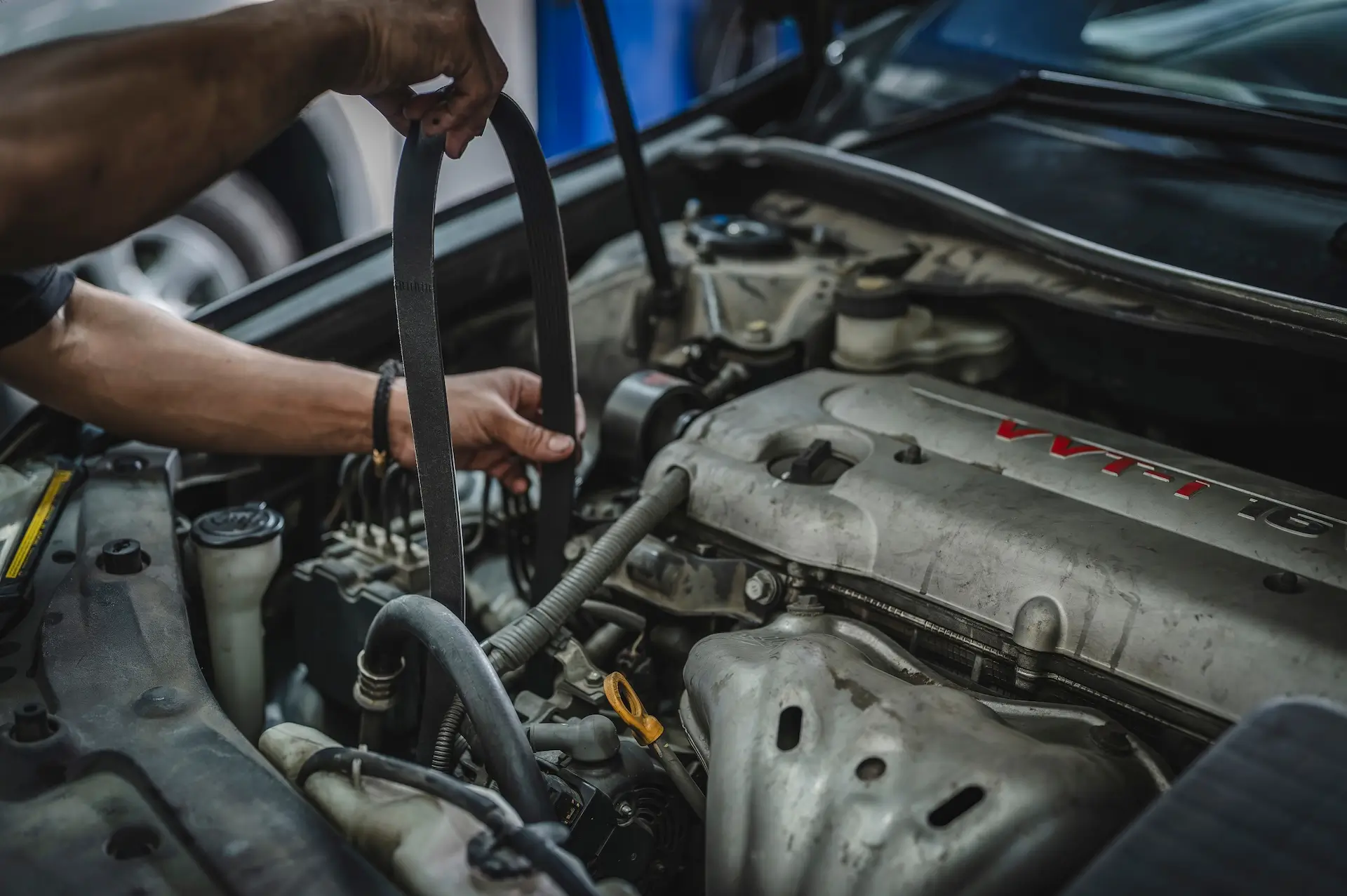
The serpentine belt transfers power from the engine to components that may include the alternator, air-conditioning compressor, power-steering pump, and water pump. A belt or pulley problem can therefore contribute to warning lights, overheating, heavy steering, or charging problems.
A brief squeal can happen when the belt slips against a pulley as the engine starts. The noise may fade once the belt begins moving consistently.
Possible causes include:
Cooler or damp mornings can make an existing issue more noticeable, but weather alone is not a diagnosis. A healthy belt system should not squeal loudly during every startup.
Pay attention to when the squeal happens instead of trying to identify one part from the sound alone.
A short squeal as the engine turns over may involve belt tension, wear, or a pulley that resists movement. Repeated startup squealing is worth checking even if it disappears.
A squeal that rises with acceleration can involve belt slip, a pulley, the tensioner, a bearing, or a driven accessory.
If the noise begins or becomes louder when the A/C is switched on, the compressor, clutch, belt, or tensioner may need inspection.
On vehicles with belt-driven hydraulic power steering, noise during turns may involve the belt or steering system. Vehicles with electric power steering can have a different cause.
A continuous squeal, chirp, grind, or rattle may indicate more advanced wear or a component that is not rotating correctly. Have the system inspected instead of guessing.
With the engine off, cooled, and the keys removed, you may be able to see obvious warning signs. Never reach into the engine compartment while it is running.
Look for:
Modern belts can wear without dramatic cracks, so appearance alone cannot confirm their condition. A technician can inspect the belt, tensioner, pulleys, bearings, and driven components together.
Spraying the belt with lubricant, dressing, or a household product may change the sound temporarily while contaminating the belt or making slipping worse.
The useful question is not simply how to stop the noise. It is why the belt system is making the noise. Grease Pro’s belts and hoses service covers the connected components that should be checked before recommending a repair.
A brief squeal does not always mean the vehicle will stop immediately, but a damaged belt, seized pulley, or failing tensioner can worsen without much warning.
Stop driving as soon as it is safe and arrange help if the squeal is accompanied by:
If a warning light or weak electrical performance appears with the noise, a starting and charging system check can help determine whether the alternator or another part of the charging system is involved.
Replacing the belt without finding the cause can allow the noise to return. An inspection should cover belt condition, tension, alignment, bearings, leaks, and the components powered by the belt. Tell the technician when the noise occurs and what makes it change.
Grease Pro’s auto repair services include diagnostics and repair options for many of the systems connected to a startup squeal. Service availability varies by shop, so it is important to choose a participating location.
A startup squeal is useful information about what is happening under the hood. An early inspection can catch a worn belt, tensioner, pulley, leak, or related component before the problem becomes more disruptive.
Write down when the noise happens and what makes it louder, then find a Grease Pro location that offers the appropriate service. Our team can inspect the system, explain what is causing the sound, and recommend the repair that fits your vehicle.
A brief startup squeal can happen when the serpentine belt slips against a pulley. Belt wear, low tension, misalignment, moisture, a worn bearing, or added load from a belt-driven component may be involved.
The belt may grip differently once it has moved for a short time or the conditions around it have changed. The disappearing noise does not confirm that the issue is harmless, especially if it returns during every startup.
Yes. A new belt may squeal if the tensioner is weak, a pulley is misaligned, a bearing is failing, fluid has contaminated the system, or the wrong belt was installed. The complete belt drive should be checked.
Schedule an inspection soon if the noise keeps returning. Stop driving if it appears with overheating, heavy steering, smoke, a burning smell, a charging warning light, or visible belt damage.
Find the nearest Grease Pro location offering the service you need.
BROWSE ALL LOCATIONS +