Car Wash vs Car Detailing: What’s the Difference?

Understanding the Basics of Car Wash and Detailing

Keeping your vehicle clean is more than just about appearances—it plays a crucial role in maintaining its condition and longevity. When it comes to car cleaning, there are two primary options: a car wash and car detailing. While a quick car wash can remove surface dirt and grime, detailing goes much deeper, targeting both the interior and exterior with specialized care. Regular maintenance using either service helps protect your car’s finish, enhances its value, and ensures that it remains in top shape for years to come.

What is a Car Wash?

A car wash is a quick and efficient way to clean the exterior of your vehicle, removing dirt, dust, and road debris. There are different types of car washes to suit various needs: automated car washes, where machines handle the cleaning; self-service car washes, where you do it yourself using provided tools; and full-service car washes, which typically include exterior cleaning along with vacuuming and window cleaning. While a deep clean car wash can be more thorough, car washes in general are best suited for routine maintenance, offering a fast and affordable way to keep your car looking good on a regular basis.

Benefits of Grease Pro’s Wash Club

For drivers looking to maintain their vehicle’s appearance without breaking the bank, Grease Pro’s Wash Club offers a convenient and cost-effective solution. With unlimited access to regular car washes for a low monthly fee, the Wash Club makes it easy to keep your car clean without the hassle of paying for each visit. Whether you need a quick exterior clean or a more deep clean car wash, this subscription model provides flexibility and consistency. It’s perfect for those who want the benefits of a full-service car wash on a regular basis, helping to preserve your car’s finish and value over time.

What is Car Detailing?

While a car wash focuses primarily on the exterior, car detailing goes far beyond that, offering a comprehensive cleaning both inside and out. Car detailing involves specialized techniques and products to restore the vehicle’s appearance and protect its surfaces. From paint correction and polishing to deep interior cleaning, auto detailing addresses every part of the car in a way that a regular wash cannot. Whether it’s removing minor scratches or shampooing carpets, car auto detailing provides a higher level of care, enhancing your vehicle’s look and feel. 

What Does Car Detailing Include?

Car detailing includes a comprehensive set of services designed to leave your vehicle spotless both inside and out. The process typically involves exterior tasks like polishing and waxing to restore the car’s shine and protect its paint. For the interior, deep cleaning services such as carpet shampooing and leather conditioning are provided. Specialized tools are also used to reach tight spots that are often overlooked during standard cleaning. Whether it’s restoring the vehicle’s exterior or giving the interior a complete refresh, car cleaning and detailing ensures a thorough and meticulous approach to maintaining your vehicle.

Key Differences Between a Car Wash and Car Detailing

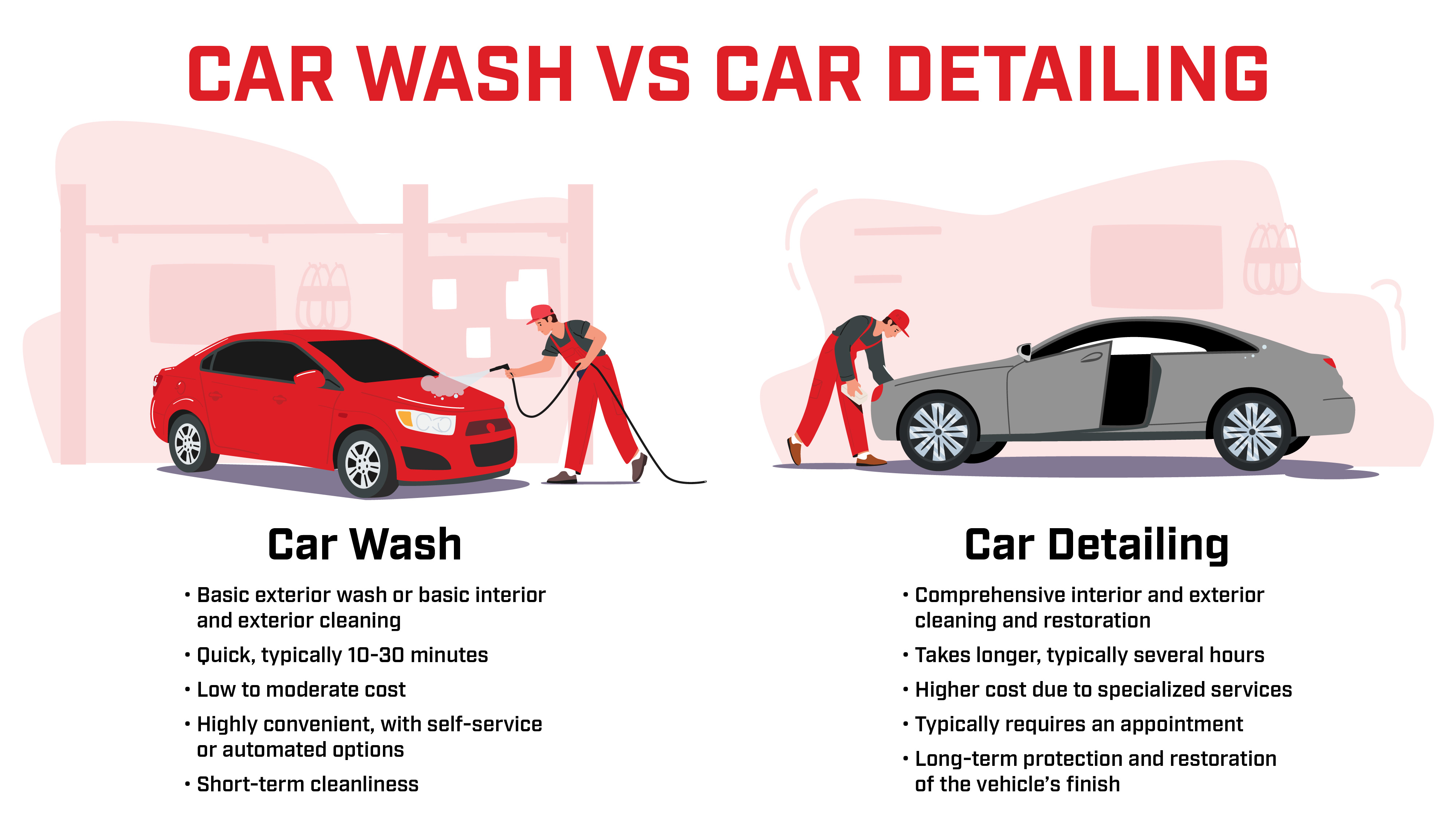
Feature Car Wash Car Detailing
Service Focus Basic exterior cleaning Comprehensive interior and exterior cleaning and restoration
Time Required Quick, typically 10-30 minutes Takes longer, typically several hours
Cost Low to moderate Higher cost due to specialized services
Convenience Highly convenient, with self-service or automated options Typically requires an appointment
Durability Short-term cleanliness Long-term protection and restoration of the vehicle’s finish

Which Service is Best for Your Vehicle?

Choosing between a car wash and car detailing depends on your vehicle’s needs and your goals. If you’re looking for quick, regular maintenance to keep your car clean, a car wash is a simple and affordable option, especially for routine upkeep. However, if your car requires a deep clean—such as before selling it, after a long road trip, or as part of seasonal maintenance—a thorough car detailing is the better choice. Regularly using both services ensures your vehicle not only looks great but also stays in top condition. A combination of routine car washes and periodic detailing can help preserve the vehicle’s finish, protect the interior, and even extend its lifespan.

Caring for Your Car: The Right Maintenance for Longevity

Regular maintenance through both car washes and detailing is essential for keeping your vehicle in top shape. While a car wash provides quick, routine cleaning, detailing offers deeper care and protection for your car’s exterior and interior. By combining these services, you can ensure your vehicle’s longevity and maintain its value. Consider your vehicle’s needs and choose the service that’s right for you.

Don’t Let the Cold Get to Your Tires: Understanding Tire Pressure In Cold Weather

The Impact of Cooler Weather on Tire Pressure

Even when the weather isn’t freezing, a drop in temperature can significantly affect your tire pressure. It’s a common misconception that tire pressure issues only occur in icy conditions. In reality, even a slight shift from summer heat to cooler weather can lead to decreased tire pressure. This can be especially noticeable after sudden cold fronts.

Why Tire Pressure Drops in Cooler Temperatures

Tire pressure can drop in cooler weather due to the contraction of air. As the air inside the tire gets colder, it takes up less space, leading to lower pressure. This phenomenon often catches drivers off guard, especially during the transition from warm to cooler seasons.


Recognizing the Signs of Low Tire Pressure

Being able to identify when your tires are low on pressure is key to maintaining vehicle safety and efficiency. In this section, we’ll explore the warning signs and indicators that your tires need attention, helping you stay proactive in your tire maintenance.

The Role of TPMS and SVC Tire Monitor Systems

Most modern vehicles are equipped with a Tire Pressure Monitoring System (TPMS) or SVC tire monitor that alerts you when tire pressure is low. The low tire pressure symbol on your dashboard is not something to ignore. It’s an essential tool for maintaining optimal tire pressure and ensuring safety.

Understanding Tire Pressure Loss

Sometimes, tires might lose pressure but show no signs of a leak. This can occur overnight due to temperature changes and is more common in cooler weather. However, if you find yourself frequently refilling your tires after a cold spell or notice that they are consistently low, the issue might extend beyond just the cold. While there might not be immediate cause for alarm, regular checks are the best way to ensure tire pressure is within the recommended range and to rule out the possibility of a slow leak that’s been missed.


Managing Tire Pressure in Cold Weather

Effectively managing tire pressure as the temperature drops is crucial for safe winter driving. Here, we discuss practical steps and strategies to maintain optimal tire pressure during the colder months, ensuring your vehicle remains reliable and ready for the road.

How to Respond to Low Tire Pressure Alerts

When your TPMS light comes on, it’s crucial to check your tire pressure as soon as possible. Driving with low tire pressure can be dangerous and can also lead to increased tire wear and reduced fuel efficiency. Knowing what tire pressure is too low for your vehicle is essential for your safety on the road.

Addressing Sudden Tire Pressure Drops

If you notice a sudden drop in tire pressure, especially after a sharp decrease in temperature, it’s important to adjust it to the correct level. However, understanding how long you can drive with low tire pressure is crucial to prevent damage to your tires and ensure a safe driving experience.


Cold vs. Hot Tire Pressure: Balancing the Changes

Adjusting to Temperature Variations

It’s important to understand the difference between cold and hot tire pressure. Tires tend to expand in hot weather and contract in cold, which means tire pressure can vary significantly between seasons. Regular checks and adjustments are necessary to maintain the correct pressure year-round.

Best Practices for Maintaining Optimal Tire Pressure

To keep your tires in top condition, regularly check their pressure, particularly during the cooler months. This helps in preventing issues like uneven wear or potential blowouts. A proactive approach to tire maintenance ensures better performance and longevity of your tires.


Staying Ahead of the Weather: Tire Pressure Maintenance

Regular tire pressure checks should be part of your vehicle maintenance routine, especially as seasons change. By staying vigilant and responding quickly to pressure changes, you can ensure your tires remain in good condition, providing a safe and efficient driving experience.


Securing Tire Safety Across the Seasons

Understanding and managing tire pressure in cold weather is crucial for vehicle safety and performance. Regular maintenance and knowledge can help you prevent tire-related issues, ensuring a smooth ride at any temperature. 

Before you hit the road this season, we recommend a visit to your local Grease Pro for professional assistance and expert advice. Our team is ready to help you with all your tire needs, ensuring you’re prepared for safe travels, no matter the weather!

Road Trip Ready: The Top Things to Check on Your Car Before Hitting the Highway

Top 10 Car Checks for a Safe Holiday Road Trip

The holiday season is here, bringing many families together through road trips. At Grease Pro, we’re dedicated to making your journey safe and joyful. To ensure your vehicle is ready for holiday adventures, here’s our comprehensive road trip checklist tailored for the most wonderful time of the year.

1. Tire Inspection – Important for Road Trip Safety

Examine your tires as part of your road trip safety protocol. Ensure they have adequate tread depth, are properly inflated, and free from damage. This is vital for safe handling and fuel efficiency, especially on long trips.

2. Brake System – Key to Your Safety

Check your brakes thoroughly, a crucial step in any pre-drive checklist. Listen for unusual sounds and note the responsiveness. If there’s any doubt, have a professional assess them to ensure your safety on the road.

3. Engine and Oil Levels – Maintaining the Health of Your Car

Regular engine and oil checks are pivotal for your vehicle’s health. Check oil levels and quality to prevent overheating, a vital part of any vehicle safety checklist. This ensures a smooth and reliable engine performance throughout your journey.

4. Coolant and Radiator Check – Avoiding Overheating

Your coolant level is crucial in maintaining engine temperature, especially important during the holiday season’s varying climates. Also, inspect the radiator for leaks or damage as part of your car’s checklist to prevent any mid-trip hassles.

5. Battery Health – Reliable Power Supply

Ensure your car’s battery is in good condition, an essential aspect of how to know if your car can make a long trip. Check for signs of wear or corrosion, and if it’s been a while, consider getting it tested or replaced.

6. Lights and Signal Functionality – Communication is Key

Functional lights and signals are vital for visibility and communication, a core aspect of road trip safety. Check all your lights, including headlights, brake lights, and turn signals, to ensure they’re working correctly.

7. Windshield Wipers and Fluid – Clear Vision for Safety

Visibility is crucial, making windshield wipers and fluid an important part of your road trip checklist. Replace any worn wipers and top up your washer fluid to ensure clear vision, no matter the weather.

8. HVAC System Check – Comfort and Visibility

Ensure your car’s HVAC system is functioning properly. Check for proper airflow and temperature adjustment. If the system isn’t heating or cooling effectively, it could indicate a need for maintenance, an important aspect of how to prepare for a road trip.

9. Emergency Preparedness – Essential for Road Trip Readiness

An updated emergency kit should be a staple in your vehicle, especially during the holiday season. This includes first aid supplies, tools, and necessary documentation, ensuring you’re prepared for any scenario.

10. Steering and Suspension – Ensuring Smooth Handling

Check your vehicle’s steering and suspension systems. Make sure the steering feels responsive and there are no unusual noises when turning. The suspension should be firm yet comfortable, providing stability and comfort on various terrains.

Set Off with Confidence This Holiday Season

As you prepare for your holiday road trips, remember the joy of the journey starts with a well-prepared vehicle. By following these essential tips, you’re ensuring a safe, enjoyable, and memorable trip. For a comprehensive checkup and peace of mind, Grease Pro is your go-to destination.

Plan your holiday road trip with confidence! Schedule a visit to Grease Pro for a thorough inspection and tune-up. Let us help you make your holiday journeys safe, enjoyable, and unforgettable. Book your appointment today and hit the highway with assurance!

How Often Should You Wax Your Car? A Detailed Guide for Shiny Rides

Keeping your car in showroom condition is more than a practice; it’s an art. At Grease Pro, we are experts in automobile beauty and often get the question, “How often should you wax your car?” So today, we’re digging into the world of car waxing to help you understand its importance and how it can benefit your vehicle. It’s about more than just the shine and the compliments you’ll receive; it’s about protecting your vehicle, enhancing its longevity, and ensuring that every drive is done in style.

What Does Waxing a Car Do?

Car wax is like a shield for your car’s exterior. It protects your vehicle from the daily wear and tear it faces. It’s not just about making your car shine; it’s about safeguarding it from environmental factors like UV rays, harsh weather conditions, and the debris that roads throw at it. When you apply wax to your car, it adds resilience, enhances its appearance, and reflects the care you put into your vehicle.

Benefits of Waxing Your Car

Waxing brings a host of practical advantages that significantly impact your vehicle’s aesthetics and well-being; think of it as a protective layer. When you apply wax to your vehicle’s surface, it forms a barrier that shields against environmental contaminants and hazards. With each application it consistently works to preserve your vehicle’s condition, ensuring the exterior reflects a story of great maintenance and lasting brilliance.

  • Paint Protection: The wax acts as a protective barrier, preventing contaminants and minor abrasions from damaging your car’s paint.
  • Enhanced Shine: It enhances the shine, giving your car a well-maintained look.
  • Water-Repellent: A waxed car repels water, making it easier to clean and adding to its aesthetic appeal.

How Often Should You Wax?

The frequency of waxing depends on factors like the type of wax you use, environmental conditions, and personal preference. We recommend finding a waxing routine that suits your car’s unique needs, ensuring it consistently looks its best.

How Long Does Car Wax Last?

The durability of car wax varies with quality. A good wax can protect your car for one to three months. To maintain that radiant look and protective layer, consider waxing every six to eight weeks. Factors such as exposure to sunlight, rain, and other environmental elements can also impact the longevity of the wax. Therefore, always consider your geographical location and parking conditions when determining the waxing frequency.

Should I Wax My Car After Every Wash?

While a freshly waxed car looks fantastic, it’s not necessary after every wash. At Grease Pro, we offer a Wash Club with unlimited washes for an effortlessly clean and well-maintained vehicle. However, applying wax post-wash can enhance the vehicle’s shine and add a protective layer, but over-waxing can lead to build-up and residue. 

Can You Wax Your Car Too Much?

In short, yes, you can. Over-waxing can lead to residue build-up, masking your car’s natural shine and the sophisticated finish that waxing provides. Not sure if your car is ready for its next wax? Stop by Grease Pro Car Wash & Detailing to let our team of experts take a look at your vehicle’s exterior and provide a recommendation.

Should You Wax a New Car?

Absolutely. Waxing isn’t just for maintaining a car; it’s about preemptively protecting a new vehicle’s pristine condition. Starting this care routine early helps in establishing a foundational protective layer, which will enhance the longevity of the car’s exterior. Furthermore, it aids in the easier removal of dirt and grime during washes, ensuring that the vehicle retains its brand-new appearance with minimal effort. Investing in waxing your new car is a proactive step toward preserving its aesthetic appeal and overall resale value.

Detailed to Perfection: Grease Pro’s Auto Detailing

Explore Grease Pro’s top-notch professional detailing packages. Our expert team works diligently to transform cars, going above and beyond to deliver meticulous care and attention to detail. Our auto specialists are committed to ensuring your vehicle is not just a means of transportation but a symbol of your pride and style on the road.

Let your car reflect unparalleled care and expertise, and enjoy the added bonus of receiving compliments on your ride. Turn to the team at Grease Pro to help you put your best wheels forward.

Why is My Car AC Blowing Hot Air? A Comprehensive Guide for a Cooler Ride

When the temperatures rise, there’s nothing more comforting than stepping into a cool, air-conditioned car. However, if your vehicle’s AC is blowing hot air, the situation quickly shifts from comforting to distressing. This abrupt switch can transform a routine drive into a challenging ordeal, especially in the heat of summer. At Grease Pro, we empathize with the discomfort of this situation, which is why we are dedicated to ensuring the optimal performance of your car’s AC system. The knowledge we impart isn’t merely about solving immediate issues; we also aim to empower you to prevent future occurrences.

The Root Cause: Insufficient Refrigerant

The most common cause for a car AC blowing hot air is a lack of refrigerant. The car may lose refrigerant over time due to leaks or consumption, which results in the AC system struggling to cool the air effectively. Regardless of the cause, the end result is the same – your car’s AC struggles to cool the air effectively. This is because the refrigerant plays a pivotal role in the cooling process, so if the quantity is compromised, the cooling ability is also significantly reduced.

The refrigerant is a crucial component in your car’s AC system. This special compound goes through a cycle within the AC unit: it absorbs heat from within the car’s cabin, and as it cycles to the exterior part of the system, it releases this absorbed heat to the outside. This heat transfer process is how your car’s interior stays cool, and it’s dependent on having enough refrigerant to carry it out.

Recognizing Signs of Refrigerant Issues

Refrigerant issues might not always be immediately apparent, especially if the decrease in refrigerant is gradual. However, certain signs can point towards low refrigerant levels. The most noticeable of these is the AC system failing to cool the car effectively or blowing out warm or hot air. While this could be due to other faults, it is often a clear indicator of insufficient refrigerant.

Other symptoms to look out for include a visible refrigerant leak under your car, frost or ice forming on the AC unit’s hoses or connectors, or the AC compressor clutch not engaging. The latter happens when the system doesn’t detect enough refrigerant, a failsafe to prevent damage to the compressor when the levels are too low.

How to Fix a Car AC Blowing Hot Air

When your car’s AC begins to blow hot air, solutions are centered around addressing the common issue – refrigerant deficiency. It’s a multi-step process that entails diagnosing the exact issue, implementing the repair, and finally, recharging the system.

Checking for Leaks

Addressing a car AC blowing hot air begins with a thorough inspection of the AC system for leaks. These leaks, often inconspicuous, can lead to a slow yet steady loss of refrigerant over time. Identifying potential leaks involves checking the AC components for signs of damage, oil stains, or even listening for a hissing noise indicating a high-pressure leak. It’s critical to fix any identified leaks before proceeding, as simply adding refrigerant without fixing the leaks will result in the same recurring issue.

Recharging the AC System

If leaks are not the issue, recharging the AC system with refrigerant might solve the problem. This process involves refilling the system with the correct type and quantity of refrigerant to restore its cooling capacity

Professional Help

Addressing issues related to your car’s AC can be complex and dangerous if you’re unfamiliar with the process. Thus, it’s advisable to seek help from professionals. At Grease Pro, we can diagnose the issue accurately and provide effective solutions to ensure your car’s AC system functions optimally.

Preventing Future Issues

Routine maintenance is key to preventing your car’s AC from blowing hot air in the future. Regular checks for leaks, maintaining optimal refrigerant levels, and servicing your AC system can go a long way in ensuring a comfortable and cool ride.

At Grease Pro, we’re dedicated to providing you with the best solutions for your car’s AC problems. Reach out to us today and experience a cool, refreshing ride every time, regardless of the weather outside.

How Long Can You Go Without an Oil Change?

Regular oil changes are vital to maintaining the health and longevity of your vehicle’s engine. Oil helps lubricate the engine’s moving parts, reducing friction and preventing wear and tear over time. Our expert technicians at Grease Pro can provide you a fast and easy walk-in oil change, and our blog will answer some common questions about oil changes and share some tips for keeping your engine running smoothly.

How Often Should You Change Your Oil?

The frequency of oil changes depends on various factors, such as the type of vehicle, driving conditions, and oil type. Generally, most car manufacturers recommend changing your oil every 5,000-7,500 miles, or every six months to a year if you drive fewer miles. However, newer vehicles may have longer oil change intervals of up to 10,000-15,000 miles.

It’s crucial to follow your vehicle’s recommended oil change intervals and not try to determine how many miles you can go over an oil change, for the health of your car. Over time, oil can break down and become contaminated with dirt, debris, and other particles. This can reduce its effectiveness in lubricating the engine and protecting it from damage. If you go too long without changing your oil, the oil can become thick, sludgy, and gummy, which can clog up the engine and cause it to run less efficiently.

What Happens If You Go Too Long Without an Oil Change?

Not changing your oil regularly can lead to a variety of issues for your vehicle. Without proper lubrication, the metal parts in your engine can rub against each other, causing friction and heat buildup. This can lead to increased wear and tear on the engine components, including the pistons, crankshaft, and bearings. Eventually, this can lead to engine damage and failure.

Another issue that can arise from not changing your oil is decreased engine performance. As the oil becomes thicker and less effective, the engine may have to work harder to operate, leading to decreased fuel efficiency and reduced power output. Going too long without an oil change can lead to costly repairs and maintenance down the road. In extreme cases, engine damage from lack of oil can be irreversible and require an engine replacement. 

Tips for Maintaining Your Vehicle’s Oil

While regular oil changes are crucial, there are several other things you can do to maintain your vehicle’s oil between oil change intervals. Here are some tips from GP to help keep your vehicle running smoothly:

  • Check your oil level regularly: It’s essential to check your oil level at least once a month, especially if you’re driving frequently or taking long trips. This will help you catch any potential problems early on and prevent damage to your engine.
  • Use high-quality oil: Choosing the right type of oil can make a big difference in the performance and longevity of your engine. Look for high-quality oils that meet or exceed the manufacturer’s recommendations.
  • Keep your engine clean: Dirt and debris can accumulate in your engine over time, which can cause your oil to become contaminated. Regularly cleaning your engine can help prevent this from happening.
  • Replace your oil filter regularly: Your oil filter is responsible for removing impurities from your oil, which can help keep your engine running smoothly. Be sure to replace your oil filter at the recommended intervals.

Regular oil changes are a vital part of vehicle maintenance that should not be ignored. By sticking to your recommended oil change intervals and ensuring that your vehicle’s engine is properly lubricated, you can help prolong the life of your engine and save yourself from costly repairs down the road. So, the next time your vehicle is due for an oil change, make sure to take the time to get it done with the expert technicians at Grease Pro – your car (and wallet) will thank you! With 12 convenient locations around Panama City and Bay County, we’ll make your walk-in oil change experience worth your time. 

How Long Does an Oil Change Take?

When it comes to oil changes, most drivers want to know one thing: how long is this going to take? On average, an oil change lasts 15 to 45 minutes. The exact time depends on where you go, the type of vehicle you drive, and whether any extra checks or services are included.

This guide breaks down what happens during an oil change, why different shops take different amounts of time, and what you can do to help keep the process quick.


Key Takeaways

  • Most oil changes take 15–45 minutes, depending on your vehicle and the shop.
  • Dealerships often take longer (30–60 minutes or more) because of extra inspections, paperwork, or bundled services.
  • Quick-service shops are the fastest, usually 15–30 minutes in the bay, with walk-in convenience and dedicated bays.
  • DIY oil changes often take 30–90 minutes, plus the hassle of cleanup and disposal.
  • Keeping up with routine maintenance makes each oil change faster and smoother.

How Fast Can an Oil Change Be Done?

At a fast-service shop like Grease Pro, most oil changes are wrapped up in about 15 to 30 minutes in the bay. In the quickest scenarios, it might take as little as 10 minutes. The total time in and out of the shop may be a little longer depending on how busy the location is, whether you walk in during peak hours, and if you’re adding services like tire rotations or wiper replacements.

Quick-service shops are designed for speed: technicians are ready, tools are in place, and the process is streamlined so you can get back on the road without a long wait.

Why Do Oil Changes Take So Long?

An oil change may sound simple, but every step takes a few minutes to do properly. Here’s what goes into it:

  1. Draining the old oil (5–10 minutes): After removing the drain plug, the oil pan needs time to fully empty. Rushing this step can leave dirty oil behind.
  2. Replacing the oil filter (2–3 minutes): The old filter is unscrewed, and a new one is installed. It’s quick but essential for trapping contaminants.
  3. Adding fresh oil (2–4 minutes): The right type and amount of oil are poured in, based on manufacturer specs. Accuracy matters here.
  4. Running the engine & checking for leaks (3–5 minutes): The car is started to circulate the oil, and the technician makes sure nothing is leaking around the plug or filter.
  5. Complimentary multi-point inspection (2–5 minutes): At Grease Pro, we check fluids, filters, wipers, lights, and tires during the oil change. Most of this happens at the same time as other steps, like while the old oil is draining, so it adds very little to your total visit time while still giving you extra value and peace of mind.

Altogether, this adds up to about 15–30 minutes in the bay, and explains why a proper oil change is never just “five minutes.”

What Can Change the Timing of an Oil Change?

Most oil changes are straightforward, but several details can make your visit quicker or slower than expected. Here are the most common factors:

Shop Traffic and Workflow

  • Lunch hours and late afternoons are often the busiest, which can create extra wait time before your car even enters a bay.
  • Quick-service shops usually keep these delays short, while dealerships or smaller garages may involve longer waits due to fewer bays or stricter scheduling.

Vehicle Design

  • Some vehicles provide easy access to the filter and drain plug, while others require removing panels or working in tight spaces.
  • European makes, trucks with skid plates, or SUVs with large oil capacities often take longer to service.

Added Services

  • Many drivers combine an oil change with tire rotations, brake inspections, wiper replacements, or fluid flushes.
  • Each service adds only a few minutes, but together they can extend your total time in the bay.

These differences explain why some drivers are in and out quickly while others may need to wait a little longer, even when the core service is the same.

How Long an Oil Change Takes at Different Shops or DIY

Dealerships (30 to 60 minutes or more)

Oil changes at dealerships often take longer because they are wrapped into a bigger process:

  • Appointment-based scheduling means you may spend time waiting for your slot, even if the oil change itself is quick.
  • Extra manufacturer-specific inspections or diagnostics add time but help with warranty compliance.
  • Bundled services, such as tire rotations or software updates, extend the total service window.

Dealerships provide convenience for warranty and service records, but they are rarely the fastest option.

Quick-Service Shops (15 to 30 minutes)

Quick-service shops are built for efficiency:

  • Walk-in convenience with no appointments required.
  • Dedicated bays reserved just for oil changes reduce wait times.
  • Essential inspections only, such as fluid checks, filter checks, and tire pressure set, without layers of dealership paperwork or added upsells.

These shops are typically the fastest choice for drivers who want a thorough oil change with minimal waiting.

DIY Oil Changes (30 to 90 minutes)

Doing an oil change yourself can save money, but it often takes more time:

  • Draining oil, swapping filters, and refilling usually take longer without lifts and professional tools.
  • Mistakes such as overfilling, stuck filters, or overtightened bolts can cause delays.
  • Safe disposal of used oil and filters requires an additional trip to a recycling center.

DIY oil changes can be rewarding, but most drivers find professional service quicker and less of a hassle.

Want Faster Oil Changes? Keep Up with Routine Care

Oil changes usually go quickly, but delays happen when parts are worn or stuck. An overdue oil filter can harden in place, drain plugs can strip, and skid plate bolts might rust, all of which add time before the oil even starts draining. Dirty or sludgy oil can slow things down, too, since the technician may need to pause and check for underlying issues.

The good news? These setbacks are far less common when oil changes are done on schedule. Routine care keeps filters easy to remove, bolts moving freely, and the system clean, making every visit faster and more predictable.

Quick Oil Changes in Panama City, Lynn Haven, and Chipley

Nobody looks forward to waiting for a car service, but keeping up with regular oil changes is the best way to avoid surprises and keep your time in the shop to a minimum. And when you want the process handled quickly and correctly, Grease Pro offers walk-in oil changes that get you back on the road without the hassle.

Plus, when you stay on top of your car’s care, it pays off. Really! With GP Loyalty Rewards, you earn 3% GP Cash on every purchase, including oil changes, which you can use toward your next visit.

5 Causes of Tire Tread Wear – And How to Avoid Them

One of the most important aspects of vehicle maintenance is keeping your tires in good condition. Not only does proper tire care improve your car’s performance, it also helps to keep you safe on the road. One common problem that can occur with tires is tread wear. This occurs when the rubber on the tire wears down, eventually leading to a blowout. In this blog post, we will discuss the five main causes of tire tread wear and how to avoid them.

1. Driving on Rough Roads

One of the most common causes of tire tread wear is driving on rough or unpaved roads. The uneven surface of these roads can cause the tire to flex and bend, which wears down the tread over time. If you must drive on an unpaved road, make sure to go slow and avoid any large potholes or rocks that could damage your tires.

2. Overinflated Tires

Another common cause of tire tread wear is overinflation. When a tire is inflated to more than the recommended pressure, it puts extra stress on the sidewalls and tread. This can cause the tread to wear down prematurely. Always check your owner’s manual or the placard on your door jamb to see what the recommended tire pressure is for your vehicle.

3. Underinflated Tires

Conversely, if your tires are underinflated, this can also cause tread wear. When a tire is not inflated to the proper pressure, it puts extra stress on the center of the tread. This can cause the tire to wear down in the middle first, eventually leading to a blowout. Always check your tire pressure regularly and inflate to the recommended pressure when necessary.

4. Misaligned Wheels

If your wheels are out of alignment, this can also cause premature tread wear. When a wheel is misaligned, it causes the tire to rub against the road surface unevenly. This will wear down the tread on one side of the tire more than the other, eventually leading to a blowout. You can tell if your wheels are out of alignment, if your car seems to pull to one side when you’re driving or if your tires are wearing unevenly. If you suspect your wheels are out of alignment, take your car to the Grease Pro nearest you to have them checked and adjusted as necessary.

5. Worn Suspension Components

Another common cause of tire tread wear is worn suspension components. When shocks or struts become worn, they can’t absorb bumps as well, which puts extra stress on the tires. This will cause the tread to wear down prematurely. If you notice that your car is bouncing more than usual or that the ride is rougher than it used to be, have your suspension checked by a mechanic.

These are just some of the most common causes of tire tread wear. By being aware of them, you can help to prevent premature tread wear and extend the life of your tires. If you do experience tread wear, bring your car to Grease Pro for all your tire service, repair, and replacement needs. We have a full range of tires for any vehicle and can help you find the perfect ones for your driving needs. Contact us today to learn more!